
Copium Meaning often sparks curiosity because this internet-born expression has turned into a cultural symbol of how people cope with disappointment online.
In digital communities, gamers, meme lovers, and social media users rely on this term to humorously describe someone who is holding onto false hope, embracing denial, or using emotional “coping fuel” to survive an unexpected loss or upsetting reality. The phrase blends cope and opium, creating a sharp yet entertaining way to highlight exaggerated optimism or stubborn belief despite clear evidence.
Understanding the real Copium Meaning helps readers decode modern slang, online humor, and the psychology behind coping mechanisms, internet culture, and meme communication. As the term continues trending across Reddit, Twitch, and X, knowing its deeper context adds clarity, enhances your conversations, and strengthens your grasp of today’s evolving digital language.
Copium Meaning — What It Really Stands For
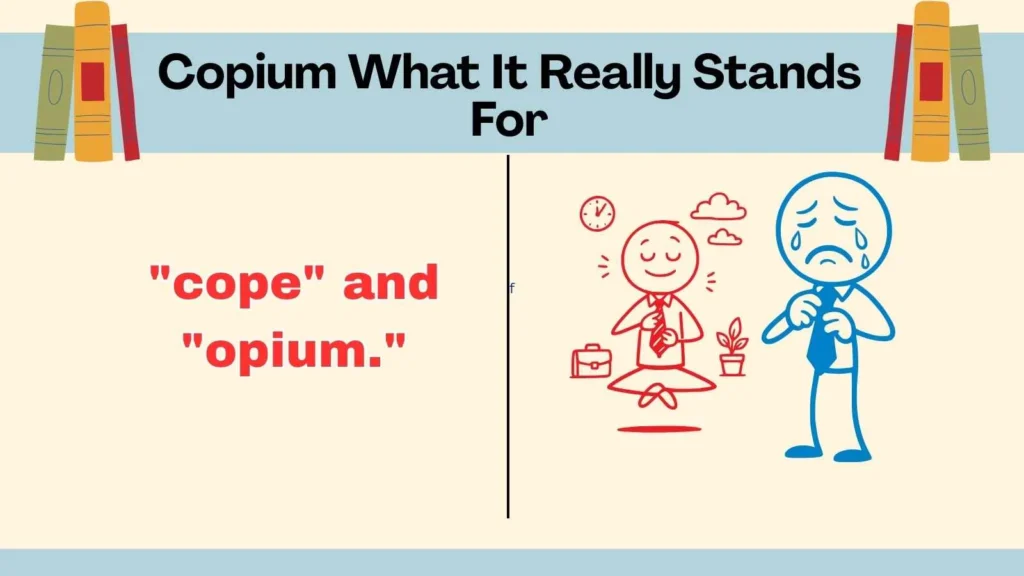
Copium is a popular internet slang term that blends the words “cope” and “opium.” It’s used to mock or highlight someone who clings to unrealistic optimism, excuses, or denial when facing an uncomfortable reality. You’ll see the word everywhere—gaming chats, meme pages, online debates, and even relationship discussions.
People use copium to joke that someone is “inhaling a fictional drug” to help them deal with disappointment, embarrassment, or a loss. Think of it like saying:
“You’re coping so hard right now that you must be high on something.”
It’s playful, sarcastic, and often tied to memes showing characters hooked to oxygen-like tanks labeled COPIUM.
Copium Meaning and Definition
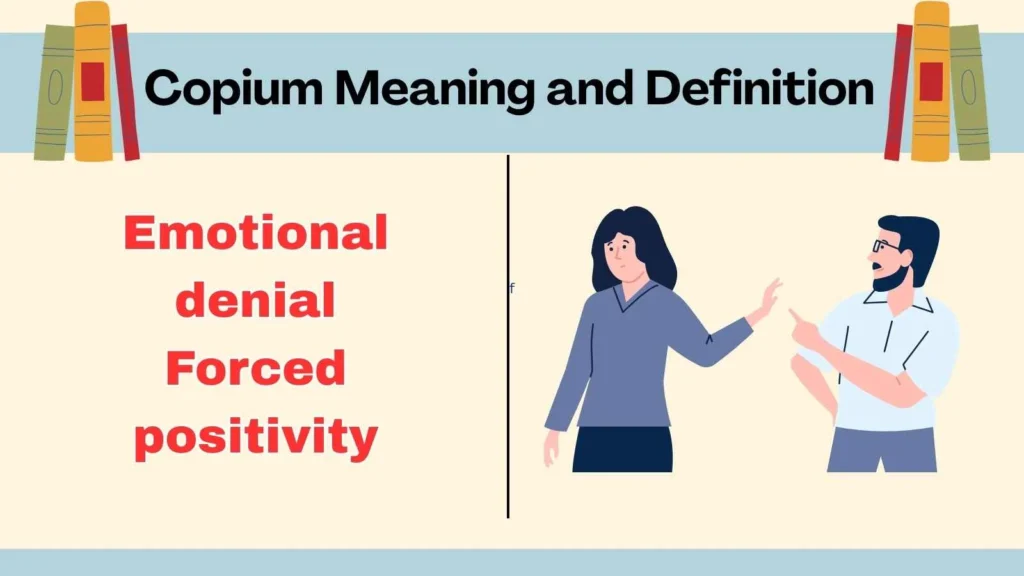
At its core, copium means a humorous and exaggerated way to say someone is coping with disappointment through denial or unrealistic optimism.
It’s not meant literally—there is no substance called copium. Instead, it’s a metaphor, like “wishful thinking,” “mental band-aid,” or “emotional escape.”
Short Definition
- Copium: A fictional “drug” people jokingly say others use to cope with failure, embarrassment, or discomfort.
Expanded Definition
Copium represents:
- Emotional denial
- Forced positivity
- Making excuses
- Refusing to accept facts
- Defending a losing position
- Overconfidence despite evidence
- Downplaying failure
Simple Real-Life Example
You expected your favorite team to win, but they lose 4–0. Your friend says:
“Bro, you’re inhaling copium if you still think they’ll win the league.”
The word softens the blow while adding humor.
Origin & History of the Word Copium
While no single, official origin exists, several cultural threads merged to create the modern copium trend.
Memes From the Early 2000s
The earliest known usage traces back to joke graphics in the mid-2000s, often used to mock political groups or sports fans after an unexpected defeat. Early memes showed a crying character hooked to a tank labeled COPIUM—a parody of medical oxygen.
Rise Through Gaming Culture
Gamers love sarcasm, and copium fit perfectly. Around the 2010–2016 era, gaming forums like:
- TeamLiquid
- Reddit gaming subs
- Twitch chats
started using the term frequently after:
- bad losses
- poor strategies
- unexpected gameplay outcomes
Twitch Streamer Influence
By 2018–2020, Twitch streamers popularized the term further. Whenever a player or viewer coped too hard, chat instantly spammed “copium”, “mass copium,” or “copium tank.”
Political Meme Warfare
Election cycles and online debates gave copium even more visibility. People used the word to mock unrealistic political predictions, incorrect assumptions, or biased reasoning.
Why It Stuck
- It’s short
- It’s funny
- It explains a complex human behavior with one word
- It pairs well with visual memes
- It works in almost every online argument
In other words, it became internet gold.
How Copium Is Used in Different Contexts
Because it’s flexible, you’ll see copium used across a wide range of online spaces. Below are the major categories with clear examples.
Gaming & Esports
Gamers love dramatic reactions. After a loss, someone might say:
- “Easy win next round, it’s all part of the plan.” (copium)
- “The enemy team cheated, no way they beat us.” (copium)
- “Lag ruined everything.” (classic copium)
Why Gamers Use It
- Helps lighten the mood
- Makes defeat funnier
- Builds community memes
- Encourages banter between players
Online Debates & Comment Sections
Whether it’s political news, celebrity drama, or tech debates, copium becomes shorthand for calling out denial.
Examples:
- “Apple fans on copium after the update flop.”
- “That prediction was wrong; stop inhaling copium.”
- “You’re coping harder than anyone in this thread.”
Everyday Conversations
Even offline, people now use it jokingly:
- “You think your 3-day gym streak changed your life? That’s copium.”
- “My crush left me on read, but maybe they’re busy… yeah, copium kicking in hard.”
Dating & Relationships
People use copium to highlight unrealistic dating expectations.
Examples:
- “He hasn’t replied for 2 weeks; stop taking copium.”
- “She said she’s not ready to date. You’re coping if you think she’ll change next week.”
Common Misconceptions About Copium
A popular term always attracts confusion. Let’s clear up the myths.
Misconception 1: Copium Is a Real Drug
No—copium is 100% fictional. It’s a metaphor like:
- Hopium
- Delusion juice
- Wishful thinking
- Mental anesthesia
Misconception 2: Copium Is Always Insulting
Not always.
Sometimes it’s:
- playful
- friendly teasing
- used between close friends
Only tone and context determine whether it’s insulting.
Misconception 3: It’s Only Used for Political Arguments
While politics amplified the term, it’s much broader. Gaming, dating, fandoms, sports, crypto communities—all use it.
Misconception 4: Copium Means Ignorance
Coping doesn’t always equal ignorance. Sometimes denial is a temporary emotional shield. Humans naturally protect their self-esteem.
Similar Terms & Alternatives
Many slang terms overlap with copium. Below is a table breaking down meanings and differences.
Comparison Table: Copium vs Similar Slang
| Term | Meaning | Tone | When Used |
|---|---|---|---|
| Copium | Denial through forced optimism | Playful/Sarcastic | After losses, bad predictions |
| Hopium | Unrealistic hope | Lighthearted | When hoping against the odds |
| Salt | Bitterness or frustration | Slightly negative | After someone loses or gets upset |
| Delulu | Delusional thinking | Humorous | Relationship-based fantasies |
| Wishful Thinking | Unfounded optimism | Neutral | Everyday reasoning |
| Cope | Handle disappointment | Neutral/Sarcastic | On its own or in arguments |
How to Respond When Someone Calls You “On Copium”
Getting labeled as “copium-dependent” can sting. But here are smart ways to respond that keep things fun and respectful.
1. Use Humor
A funny reply disarms tension instantly.
Examples:
- “Refill my copium tank; I’m not done coping yet.”
- “Yeah, I’ll take mine extra strong today.”
Humor shows confidence.
2. Clarify Your Point
If the conversation is serious, calmly explain your reasoning.
Example:
“Not coping—just giving another perspective.”
3. Accept the Joke
Sometimes it’s best to play along.
- “Fair, that was copium.”
- “Okay maybe I’m coping a bit.”
Self-awareness earns respect online.
4. Avoid Responding Aggressively
Overreacting ironically proves their point.
5. Know When to Walk Away
If someone uses copium aggressively or repeatedly, disengaging protects your time and energy.
Regional & Cultural Differences in Copium Use
While the word is globally recognized, different regions use it in unique ways.
United States
Used broadly across:
- gaming
- political discussions
- sports rivalries
- Reddit communities
Tone: playful, sarcastic.
United Kingdom
Often paired with British humor and dry sarcasm.
Examples:
- “Mate, that’s pure copium.”
- “Stop sniffing the copium cloud.”
Southeast Asia
Popular among:
- anime communities
- Mobile Legends/Valorant players
Tone: dramatic and exaggerated.
K-pop & Anime Fandoms Globally
Used when fans hope for unlikely comebacks, teaser predictions, or ship theories.
Example:
- “Still believing they’re dating? That’s elite copium.”
Middle East / South Asia
Found in meme culture, especially among cricket fans.
Example:
- “The match is over; leave the copium, bro.”
Copium vs Other Online Slang
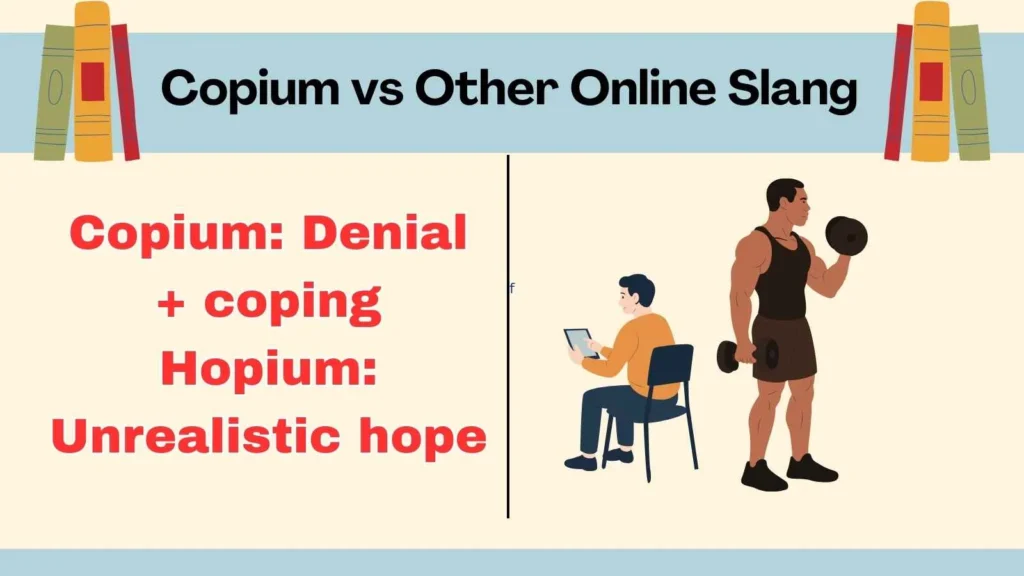
Below is a detailed comparison to help readers understand how copium meaning overlaps with or differs from other digital expressions.
Copium vs Hopium
- Copium: Denial + coping
- Hopium: Unrealistic hope
Both are metaphorical “drugs” but used for different emotional states.
Copium vs Delulu
- Delulu: Extreme delusion (often used in relationships)
- Copium: Basic denial due to disappointment
Delulu is the exaggerated cousin of copium.
Copium vs Salt
Salt focuses on bitterness, not denial.
Someone salty = upset
Someone on copium = refusing reality
Hidden, Offensive, or Controversial Meanings
While mostly humorous, copium can cross boundaries.
When It Can Feel Offensive
- When used repeatedly to shut down someone’s valid argument
- When used to mock someone’s personal struggle
- When used sarcastically during sensitive topics
- When targeted at individuals rather than ideas
Intent Matters
Calling a friend “copium addict” during a gaming loss = fine
Calling a stranger “on copium” in a serious discussion = rude
Safe Usage Tips
- Match the energy of the conversation
- Use it with people who understand the humor
- Avoid during emotional or vulnerable moments
Usage in Online Communities & Dating Apps
The term evolved beyond gaming and politics, becoming a common part of social interactions online.
On Reddit
Big subreddits like:
- r/gaming
- r/soccer
- r/cryptocurrency
- r/relationships
use copium daily, often in meme posts.
On TikTok
Creators use the term through:
- duets
- reaction videos
- skits
- “copium edits” with dramatic music
On Twitter/X
A favorite during:
- celebrity scandals
- political debates
- sports events
- tech launches
On Dating Apps
People now joke:
- “Still waiting for his text? Copium is strong.”
- “She unmatched you, stop taking copium.”
It’s become a modern relationship meme.
Case Study: Copium in Sports Culture
Sports fans are kings of coping. Whether it’s football, cricket, basketball, or MMA, copium memes explode online after major losses.
Example Case: Football Match Loss
A popular team loses 3–1.
Fan reactions:
- “The referee was biased.”
- “We’ll win next year.”
- “This is all part of the rebuild.”
Sports communities call this “copium season.”
Why? Fans use optimism as emotional protection. The memes help people laugh through disappointment.
Case Study: Cryptocurrency Traders
Crypto communities arguably use copium more than anyone else.
When prices crash:
- “This dip is bullish.”
- “It’s market manipulation.”
- “Hold tight; the moon is near.”
Investors jokingly describe these reactions as:
- “copium overdose”
- “copium injection”
- “100% pure copium”
It’s part humor, part emotional survival.
FAQs About Copium Meaning
### What Does Copium Mean in Simple Words?
Copium means joking that someone is in denial and using fake “emotional medicine” to avoid accepting reality.
### Is Copium a Bad Word?
Not usually. It’s mostly playful, but context matters. Used kindly, it’s harmless. Used aggressively, it can feel insulting.
### Where Is Copium Used the Most?
It’s common in gaming communities, social media arguments, sports fandoms, crypto discussions, and meme culture.
### Does Copium Mean Someone Is Weak?
No. It simply means someone is coping with disappointment, which is a normal human reaction.
### Is Copium Related to Hopium?
Yes. Both are metaphorical “drugs.” Copium = denial. Hopium = unrealistic hope.
Conclusion
The term copium isn’t just another piece of internet slang—it’s a cultural snapshot of how people navigate disappointment with humor and creativity.
Whether used in gaming, relationships, debates, or sports, copium transforms a frustrating moment into something we can laugh about. It highlights the very human desire to soften emotional blows with optimism, denial, or hopeful imagination.
Used carefully and respectfully, it can create a sense of shared humor and community. But like any slang, tone and timing are everything. Understanding its meaning helps you join conversations without misunderstanding or offense.

Jhon is a passionate writer at AniversaryLove.com, dedicated to sharing heartfelt messages and creative ways to celebrate love and special moments. With a flair for crafting emotional and relatable content, he inspires readers to express their feelings in meaningful ways. His words connect hearts and make every celebration unforgettable.