FOMO Meaning goes beyond just a trendy acronym; it captures the anxious feeling of missing out on experiences that others seem to enjoy.
In today’s hyper-connected world, where social media updates, viral trends, and exclusive events dominate our screens, understanding FOMO is crucial for maintaining mental well-being and making informed life choices. From career opportunities to personal relationships, this psychological phenomenon subtly influences decisions, often pushing people toward impulsive actions or unnecessary commitments.
Its roots, effects, and practical ways to manage it, you can gain clarity, confidence, and control over your lifestyle. Whether you’re a digital native constantly scrolling through feeds or someone curious about modern social pressures, unraveling the true meaning of FOMO reveals why it shapes our thoughts, habits, and social interactions more than we realize.
Understanding FOMO: Definition and Core Concept
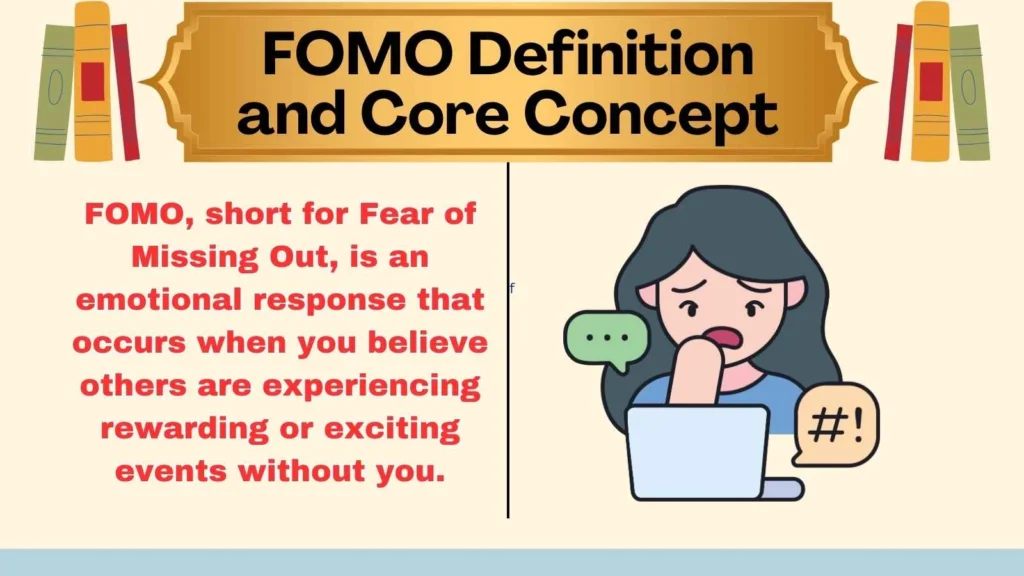
FOMO, short for Fear of Missing Out, is an emotional response that occurs when you believe others are experiencing rewarding or exciting events without you. It’s more than just feeling left out; it taps into anxiety, social comparison, and a desire to stay connected.
Key Points About FOMO:
- FOMO is psychological, not just social.
- It’s often triggered by social media or digital notifications.
- Can affect decision-making, causing overcommitment or impulsive choices.
Example: You see a friend posting a story from a party you weren’t invited to. Instead of enjoying your evening, you feel anxious, wishing you were there. That emotion is FOMO in action.
FOMO vs Simple Curiosity:
FOMO drives anxiety and dissatisfaction, while curiosity is neutral and does not induce stress.
The Origin of FOMO
The term FOMO was first coined in 2004 by Patrick J. McGinnis, in a student essay at Harvard Business School. He described FOMO as a “perpetual fear that others might be having rewarding experiences from which one is absent.”
Historical Context:
- Even before the term existed, psychologists recognized the concept as social anxiety and envy.
- In the digital age, FOMO became amplified by constant online connectivity.
Quote:
“FOMO is the modern mind’s anxiety, fueled by endless visibility into everyone else’s life.” – Patrick J. McGinnis
Fact: Studies show that up to 56% of young adults report experiencing FOMO daily due to social media use.
FOMO in Modern Culture
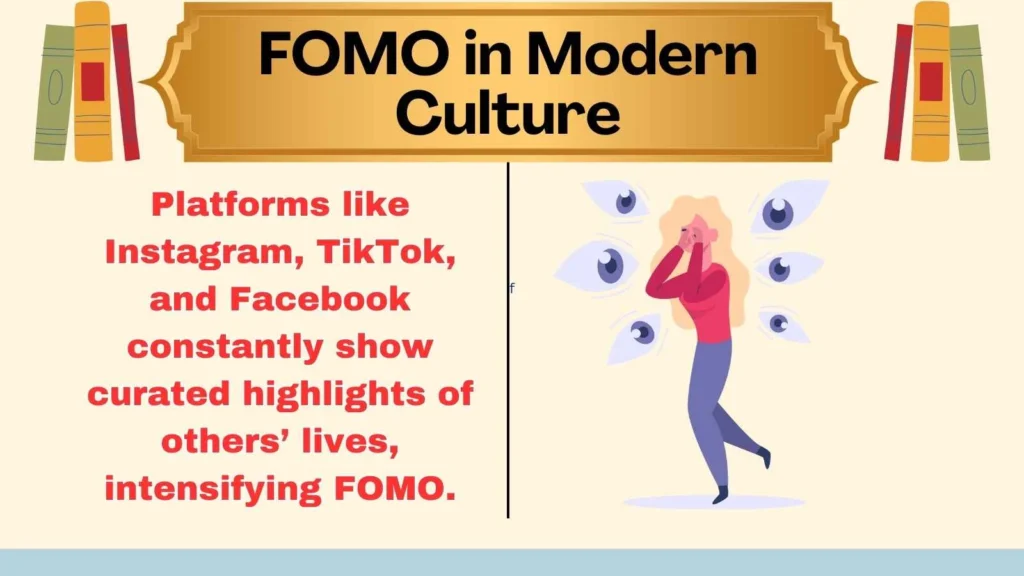
FOMO isn’t just a feeling; it’s a cultural phenomenon.
Social Media and Technology:
Platforms like Instagram, TikTok, and Facebook constantly show curated highlights of others’ lives, intensifying FOMO.
Marketing and Consumer Behavior:
Brands exploit FOMO to boost sales through limited-time offers, exclusive products, and flash sales. Phrases like “Only 2 left!” or “Offer ends today!” trigger FOMO.
FOMO vs Healthy Anticipation:
| Factor | FOMO | Healthy Anticipation |
|---|---|---|
| Emotion | Anxiety, regret | Excitement, motivation |
| Focus | Others’ actions | Personal goals |
| Outcome | Stress, overcommitment | Planning, satisfaction |
Example:
Booking a vacation just because friends are going, not because you want to, is FOMO-driven. Planning a trip for yourself? That’s anticipation.
How FOMO Affects Mental Health
FOMO isn’t just a minor irritation—it can have real consequences on mental health.
Impacts Include:
- Anxiety: Feeling you’re missing out constantly raises stress levels.
- Sleep Disturbances: Checking notifications late at night is common among FOMO sufferers.
- Low Satisfaction: Constant comparison reduces happiness.
- Impulsive Decisions: Overbooking social events or making unnecessary purchases.
Case Study:
A 2021 survey found that young adults who spent over 3 hours daily on social media were 2x more likely to experience FOMO-related anxiety and dissatisfaction.
Tip:
Recognizing the signs of FOMO is the first step toward regaining control.
FOMO in Different Contexts
FOMO manifests in many areas of life.
Work and Career:
- Fear of missing promotions, networking events, or opportunities.
- Leads to overworking, burnout, or multitasking excessively.
Relationships and Social Life:
- Anxiety about missing gatherings, dates, or social invitations.
- Can cause people-pleasing behaviors and exhaustion.
Travel and Experiences:
- Feeling compelled to see “trending” destinations or attend events.
- Can result in regretful decisions rather than enjoyable experiences.
Signs You’re Experiencing FOMO
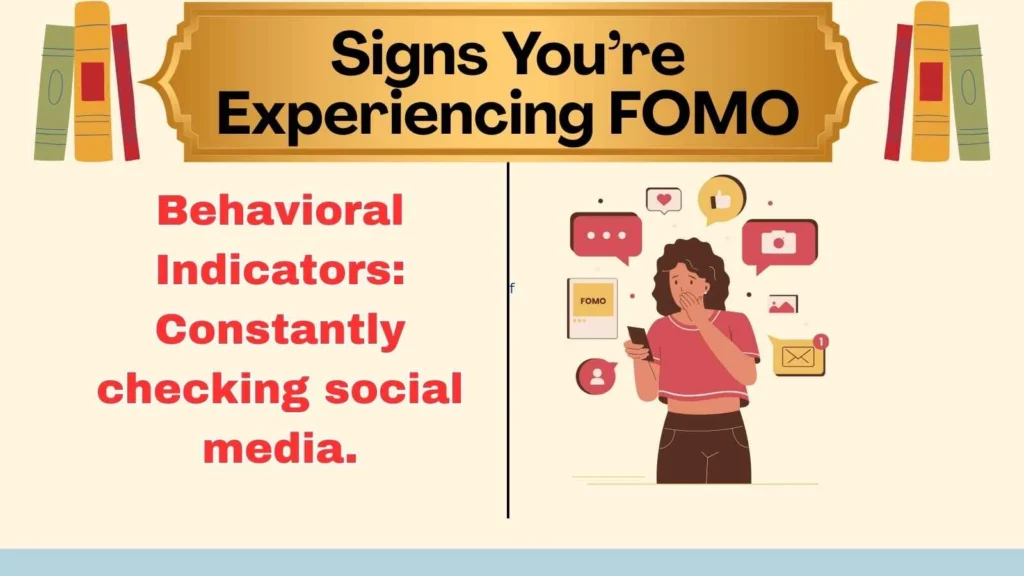
Recognizing FOMO is easier when you know what to look for.
Behavioral Indicators:
- Constantly checking social media.
- Overcommitting to events.
- Feeling anxious when offline.
Emotional Signs:
- Regret after missing events.
- Dissatisfaction with personal life.
- Heightened jealousy or envy of others.
Quick Checklist:
- Do you feel anxious seeing posts about friends’ activities?
- Do you make decisions based on what others are doing?
- Do you find it hard to enjoy your own experiences?
If yes to any, FOMO may be influencing your choices.
FOMO vs JOMO (Joy of Missing Out)
JOMO is the antidote to FOMO. It means embracing the joy of missing out and finding satisfaction in your own choices.
Key Differences:
| Aspect | FOMO | JOMO |
|---|---|---|
| Emotion | Anxiety | Contentment |
| Focus | Others’ experiences | Your experiences |
| Behavior | Overcommitment | Mindful choices |
| Outcome | Stress | Happiness |
Tips to Practice JOMO:
- Limit social media usage.
- Focus on activities that genuinely interest you.
- Accept that missing some events is okay and healthy.
Quote:
“You don’t have to attend every party to live a full life.” – Unknown
FAQs About FOMO
What is the difference between FOMO and anxiety?
FOMO is a specific anxiety about missing experiences, while general anxiety may have no specific cause.
Is FOMO always bad?
No, mild FOMO can motivate you to try new things, but chronic FOMO leads to stress.
How can I reduce FOMO in my life?
Focus on mindfulness, limit social media, and prioritize personal goals.
Can FOMO affect work performance?
Yes, overcommitting due to FOMO can lead to burnout, multitasking, and reduced productivity.
Does age affect FOMO?
FOMO is more common in young adults, but it can affect anyone with heavy social exposure or comparison habits.
Conclusion
FOMO, the Fear of Missing Out, is a modern psychological phenomenon amplified by technology, social media, and cultural pressures.
While it can motivate you occasionally, chronic FOMO leads to anxiety, stress, and reduced satisfaction in life.
By recognizing the signs, practicing JOMO, and prioritizing your own experiences, you can regain control and make more mindful, joyful decisions.
Remember: life isn’t about following everyone else; it’s about finding what truly fulfills you.

Jhon is a passionate writer at AniversaryLove.com, dedicated to sharing heartfelt messages and creative ways to celebrate love and special moments. With a flair for crafting emotional and relatable content, he inspires readers to express their feelings in meaningful ways. His words connect hearts and make every celebration unforgettable.