AI Meaning goes far beyond just “artificial intelligence.” In today’s fast-paced digital world, AI has transformed the way we work, communicate, and make decisions.
From machine learning algorithms and natural language processing to automation tools and predictive analytics, understanding the true essence of AI is crucial for anyone navigating the modern tech landscape. AI concepts, its real-world applications, and the impact on industries reveals how it reshapes business strategies, healthcare innovations, and daily life experiences.
By grasping the core principles behind AI, you gain insights into intelligent systems, data-driven solutions, and futuristic technologies that drive our world forward. This comprehensive guide will illuminate the meaning, types, and practical significance of AI, offering a clear path for beginners and professionals alike.
What AI Really Means
AI, short for Artificial Intelligence, refers to computer systems designed to perform tasks that typically require human intelligence. These tasks can include:
- Learning from experience (Machine Learning)
- Recognizing patterns in data
- Understanding language (Natural Language Processing)
- Making decisions and predictions
In simpler terms, AI allows machines to mimic human thinking, but it doesn’t mean they “think” like humans. They process vast amounts of data and follow algorithms to generate responses or actions.
Example:
When you type a query into Google, AI algorithms decide which results are most relevant in milliseconds. Your next Netflix recommendation? Also powered by AI.
History and Evolution of AI
AI has a rich history, with ideas stretching back decades. Understanding its evolution helps clarify its meaning today.
Timeline of AI Development:
| Year | Milestone | Significance |
|---|---|---|
| 1950 | Alan Turing proposes the Turing Test | Concept of machines “thinking” |
| 1956 | Dartmouth Conference | Term “Artificial Intelligence” coined |
| 1960s-70s | Early AI Programs | Solved logical problems, limited computing power |
| 1980s | Expert Systems | AI applied in medical diagnosis and finance |
| 1997 | IBM Deep Blue defeats Garry Kasparov | Milestone in AI beating humans in chess |
| 2010s | Rise of Machine Learning & Deep Learning | AI becomes practical with big data and GPUs |
| 2020s | Generative AI | AI creates images, text, and music |
AI has shifted from theory to practical applications in almost every sector. Today, it’s embedded in products and services you use daily.
How AI is Used Across Different Contexts
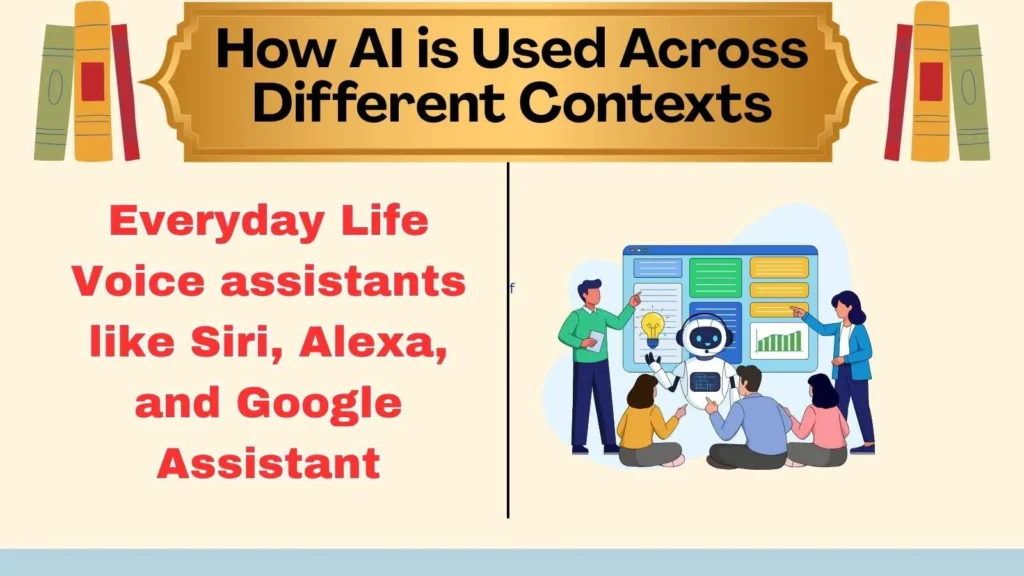
AI is everywhere, but its applications vary depending on the context. Here’s a detailed look:
Everyday Life
AI has become almost invisible, yet indispensable in daily routines. Some examples include:
- Voice assistants like Siri, Alexa, and Google Assistant
- Smart home devices that adjust lighting, temperature, and security
- Navigation apps like Google Maps using AI for traffic predictions
- Recommendation systems for shopping, music, and streaming
Fact: 77% of U.S. households now own a smart speaker powered by AI.
Social Media
AI drives the experience on platforms like Instagram, Facebook, and TikTok:
- Content curation: Feeds tailored to your interests
- Face recognition: Automatic tagging in photos
- Fake news detection: Identifying misleading content
- Ad targeting: Personalized ads based on browsing behavior
AI ensures you see what’s most relevant, sometimes even before you know you want it.
Business & Industry
AI has transformed the corporate world:
- Customer service chatbots handle thousands of inquiries instantly
- Predictive analytics anticipate trends and market demand
- Automation streamlines repetitive tasks, saving time and money
- Fraud detection in banking and finance
Case Study:
Amazon uses AI to optimize warehouse logistics. Robots move products efficiently, and AI predicts inventory demand, reducing costs significantly.
Gaming & Entertainment
AI is not just functional—it’s fun:
- Non-player characters (NPCs) in games behave realistically
- Procedural content generation creates unique game levels
- Recommendation algorithms suggest personalized movies, music, or shows
Quote: “AI is the new co-creator, not just a tool.” – Industry Analyst
Common Misconceptions About AI
Despite its prevalence, AI is often misunderstood. Let’s clarify some myths:
- Myth 1: AI is conscious.
Fact: AI has no awareness—it follows algorithms and patterns. - Myth 2: AI will take all human jobs.
Fact: AI automates tasks but also creates new career opportunities. - Myth 3: AI always makes unbiased decisions.
Fact: AI can inherit biases from the data it’s trained on. - Myth 4: AI is expensive and only for tech giants.
Fact: Many AI tools are now accessible to small businesses and individuals.
Similar Terms and Alternatives
Understanding related terms helps grasp AI fully:
| Term | How it Differs from AI |
|---|---|
| Machine Learning (ML) | Subset of AI where machines learn from data |
| Deep Learning | Neural network-based ML for complex data like images and speech |
| Neural Networks | Algorithms inspired by human brain structure |
| Cognitive Computing | AI simulating human thought processes |
Tip: Use the correct term depending on context. For example, ML is a subset of AI, not a replacement.
AI in Communication
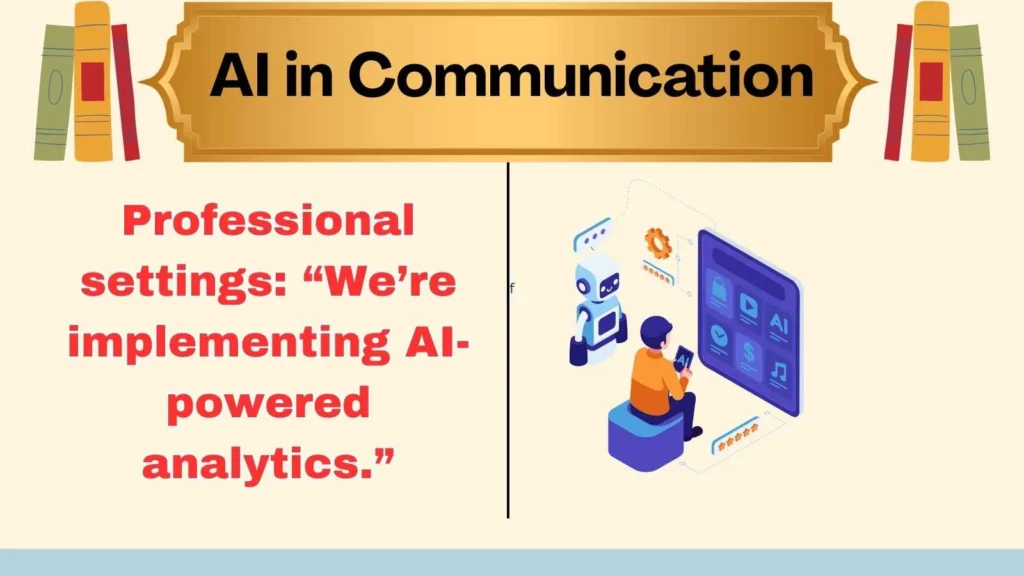
How you talk about AI matters. Using it correctly shows professionalism:
- Professional settings: “We’re implementing AI-powered analytics.”
- Casual conversation: “AI helps me pick movies on Netflix.”
- Avoid jargon when speaking to non-technical audiences.
Regional/Cultural Variations:
- In some countries, AI discussions focus on ethics and regulation
- In others, the emphasis is on innovation and economic growth
AI in Online Communities and Tech Spaces
Online spaces often develop their own AI slang and shorthand:
- “AI bot” – automated accounts or systems
- “GANs” – Generative Adversarial Networks used in creative AI
- “Prompt engineering” – crafting input to guide AI outputs
Hidden or Offensive Meanings:
Most AI references are neutral, but in rare cases, “bot” can be used derogatorily to describe people behaving predictably.
Evaluating AI’s Suitability for Your Work
Before adopting AI, consider:
- Purpose: Are you solving a problem or just following trends?
- Ethics: Ensure AI use is transparent and unbiased
- Cost vs. Benefit: Open-source AI tools vs. commercial software
Examples of AI Tools by Industry:
| Industry | AI Tool | Use Case |
|---|---|---|
| Marketing | HubSpot AI | Content creation & analytics |
| Education | Grammarly | Writing assistance |
| Healthcare | IBM Watson | Diagnosis assistance |
| Finance | KAI | Customer service & fraud detection |
AI is a powerful tool, but its value depends on proper implementation.
FAQs About AI
What does AI stand for?
Answer: AI stands for Artificial Intelligence, the simulation of human intelligence in machines.
Is AI dangerous?
Answer: AI is safe when used responsibly, but misuse or bias can cause problems.
Can AI think like humans?
Answer: No, AI follows programmed rules and learns from data—it does not have consciousness.
How is AI affecting jobs?
Answer: AI automates repetitive tasks but also creates new roles in tech, analytics, and AI management.
What is the difference between AI and Machine Learning?
Answer: Machine Learning is a subset of AI that allows machines to learn from data and improve over time.
Conclusion
Understanding the meaning of AI is more than knowing the acronym—it’s about recognizing its capabilities, applications, and limitations.
From daily life to business and gaming, AI shapes our world in profound ways. By clearing misconceptions, learning key terms, and understanding professional usage, you can navigate the AI-driven era confidently.
AI isn’t just a buzzword; it’s a tool, a partner, and a powerful force for innovation. The more you know, the better equipped you are to harness its potential responsibly.

Smith writes for AniversaryLove.com, sharing touching stories and tips to make love last a lifetime. With a passion for celebrating relationships, Smith inspires readers to cherish every special moment. Through heartfelt guidance, every article sparks romance and connection.