Sushi Meaning goes far beyond a simple Japanese dish; it represents a rich cultural heritage, artful culinary technique, and a delicate balance of flavors that has fascinated food lovers worldwide.
From the precise selection of fresh fish to the perfectly seasoned vinegared rice, every element of sushi tells a story of tradition, skill, and innovation.
Understanding the true essence of sushi not only deepens your appreciation for Japanese cuisine but also reveals the subtle symbolism behind each roll, each nigiri, and every presentation. Enthusiasts often wonder why sushi has become a global phenomenon, blending health-conscious eating, aesthetic presentation, and exquisite taste.
What Does “Sushi” Really Mean?
The term “sushi” comes from the Japanese word “su”, meaning vinegar, and “shi”, from meshi, meaning rice. So, at its core, sushi literally means “vinegared rice”. Contrary to popular belief, sushi is not defined by raw fish, although that’s often what people imagine.
Over time, sushi has evolved to include various toppings, such as seafood, vegetables, and even tropical fruits, but the vinegared rice remains the foundation.
Fun fact: In traditional Japanese culture, sushi was originally a method of preserving fish with fermented rice, which is quite different from the fresh sushi served today.
History and Cultural Background
Sushi has a fascinating journey:
- Early Origins: It began over a thousand years ago in Southeast Asia as a fermented fish dish called narezushi.
- Arrival in Japan: By the Edo period (1603–1868), sushi in Japan evolved into fast food for busy urbanites, with fresh fish served on hand-pressed rice.
- Global Spread: Sushi became popular worldwide in the 20th century, especially with the rise of California Rolls in the United States during the 1960s and 70s.
Table: Sushi Evolution Over Time
| Period | Sushi Style | Key Feature |
|---|---|---|
| 8th-10th Century | Narezushi | Fermented fish with rice |
| 17th-19th Century | Edomae sushi | Fresh fish on hand-pressed rice |
| 20th Century | Modern sushi | Introduction to Western countries, rolls, and fusion cuisine |
Sushi in Everyday Language
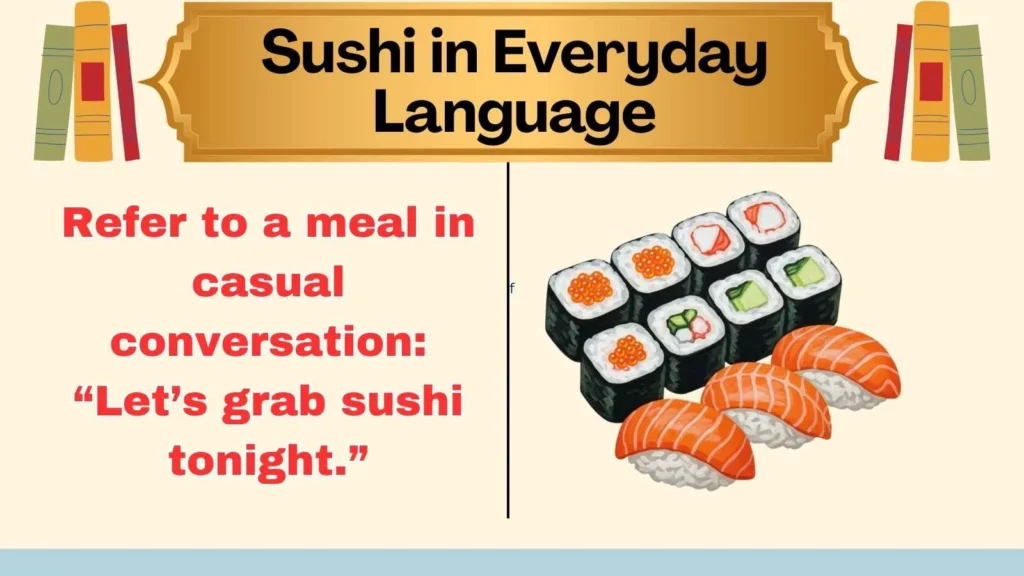
Sushi isn’t just a food item; it’s part of Japanese everyday speech. People often use it to:
- Refer to a meal in casual conversation: “Let’s grab sushi tonight.”
- Describe something delicate or carefully prepared: “That project was like sushi — precise and perfect.”
- Add cultural context in idioms: Some Japanese expressions like “sushi ga umaku tsukutta” (literally, “made like sushi”) emphasize meticulous craftsmanship.
Non-native speakers often misunderstand sushi as always raw fish, but in Japan, the term focuses on the rice preparation rather than the topping.
Sushi on Social Media and Texting
Sushi has become a digital phenomenon, especially on social media:
- Popular hashtags: #SushiTime, #SushiLover, #SushiArt
- Emoji use: 🍣 is universally recognized, making posts more engaging.
- Trends: Sushi challenges, DIY sushi rolls, and sushi platters frequently trend on TikTok and Instagram.
Example: A viral TikTok video featuring rainbow sushi rolls amassed over 10 million views, showing how visual appeal drives social media engagement.
Tip: When texting, “sushi” is often shorthand for fun foodie plans or a night out, and adding the 🍣 emoji adds a playful tone.
Professional and Culinary Contexts
Sushi isn’t just a casual food; it has strict professional standards:
- Restaurants: Menus may list Nigiri, Maki, Sashimi, or specialty rolls. Each has specific ingredients and presentation rules.
- Chef Terminology: Sushi chefs (itamae) undergo years of training to perfect rice seasoning, knife skills, and presentation.
- Culinary Use: In professional kitchens, using the term sushi correctly is essential. Calling sashimi “sushi” would be incorrect because sashimi lacks rice.
Fact: The average sushi chef in Japan trains 5–10 years before handling high-end sushi independently.
Sushi Around the World
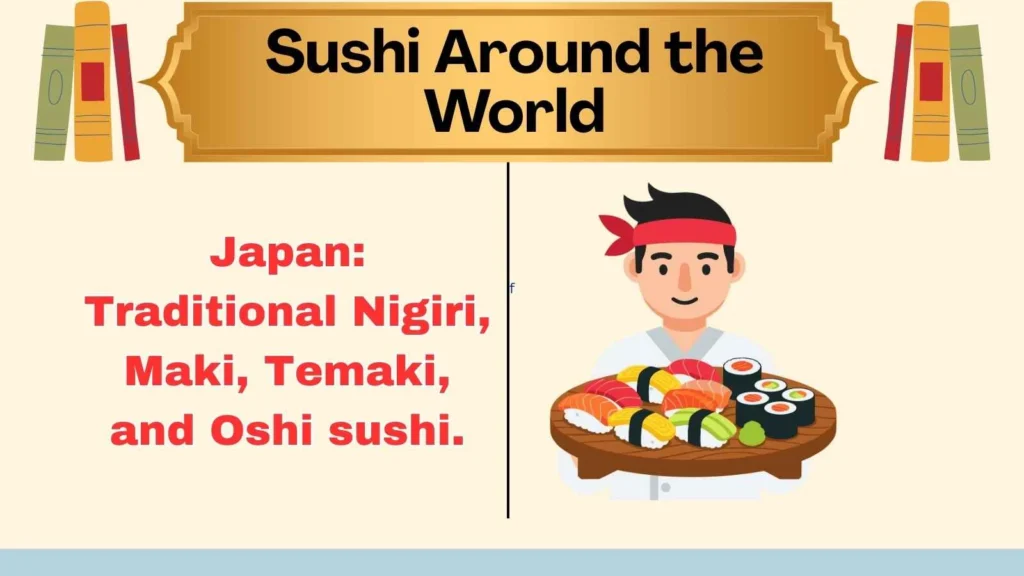
Sushi has transcended borders, and every region adds its unique twist:
- Japan: Traditional Nigiri, Maki, Temaki, and Oshi sushi.
- United States: Fusion rolls like California Roll or Dragon Roll.
- Europe: Often incorporates smoked salmon or avocado, adapting to local tastes.
Table: Regional Sushi Differences
| Region | Popular Sushi Type | Unique Twist |
|---|---|---|
| Japan | Nigiri | Traditional, fresh fish |
| USA | California Roll | Avocado and cooked crab |
| Europe | Fusion Rolls | Smoked salmon, cream cheese |
| Southeast Asia | Tropical Sushi | Mango, tropical fruits |
Misconceptions and Clarifications
Sushi carries some common misunderstandings:
- Raw fish myth: Sushi can be cooked, pickled, or vegetarian.
- Japanese-only dish: Many cultures have sushi-style dishes now, including Korean kimbap.
- Expensive misconception: Sushi ranges from budget-friendly rolls to high-end omakase experiences.
Pro Tip: When in doubt, focus on vinegared rice, not the topping, when discussing sushi’s meaning.
Similar Terms and Alternatives
Sushi often gets confused with other Japanese terms:
- Sashimi: Raw fish only, no rice.
- Nigiri: Hand-pressed rice topped with fish.
- Maki: Rolled sushi with nori (seaweed).
Quick Reference Table: Sushi vs. Similar Terms
| Term | Ingredients | Key Difference |
|---|---|---|
| Sushi | Rice + toppings | Focus on rice |
| Sashimi | Raw fish | No rice |
| Nigiri | Rice + fish | Hand-pressed rice |
| Maki | Rice + fillings rolled in nori | Rolled format |
Sushi in Online Communities & Food Apps
- Sushi dominates foodie platforms:
- Yelp & TripAdvisor: Restaurants often categorized by sushi quality.
- Food Apps: Uber Eats, DoorDash highlight sushi freshness and presentation.
- Community Slang: “Sushi spot” = a trendy or high-quality sushi restaurant.
2. Sushi lovers frequently discuss ingredient sourcing, chef skills, and rice seasoning, which shows how the term extends beyond just the dish.
Hidden or Offensive Meanings
While mostly neutral, some cultural sensitivities exist:
- Respect for ingredients: Using sushi in slang disrespectfully can offend culinary purists.
- Avoid inappropriate metaphors: Comparing sushi to unrelated concepts in professional or formal settings may seem trivializing.
Tip: In professional or multicultural conversations, stick to the literal or culinary sense of sushi.
Tips for Using “Sushi” in Communication
Whether texting, blogging, or traveling, here’s how to use the word effectively:
- In emails/articles: Stick to culinary or cultural context.
- With friends: Feel free to be playful — sushi has social and fun connotations.
- Traveling: Knowing the different types (Nigiri, Maki, Sashimi) makes ordering easier and more authentic.
Quick List: Effective Sushi Usage
- 🍣 Texts: Fun, casual
- 📖 Blogs: Cultural and culinary depth
- 🛫 Travel: Ordering & etiquette
- 👨🍳 Professional: Accurate terminology
FAQs
What is sushi exactly?
Sushi is a Japanese dish of vinegared rice with various toppings, cooked or raw.
Is sushi always raw?
No, sushi can have cooked fish, vegetables, or even fruits.
What’s the difference between sushi and sashimi?
Sashimi is just raw fish, while sushi always includes vinegared rice.
Can “sushi” mean something else in slang?
Sometimes used playfully in social media to refer to fun food experiences or a night out.
How do I order sushi like a local?
Learn the types of sushi (Nigiri, Maki, Temaki), ask for fresh fish, and respect chef etiquette.
Conclusion
Sushi is far more than a trendy meal; it’s a culinary art form, a cultural symbol, and a global phenomenon.
Its meaning stretches from vinegared rice in Japan to Instagram-famous rainbow rolls in New York. Understanding sushi involves appreciating its history, recognizing its global variations, and using the term respectfully in conversation.
Next time you say “let’s grab sushi”, you’re not just talking about food — you’re referencing a rich tradition that spans centuries and continents. So, savor it thoughtfully, whether on your plate or in your language. 🍣

Jhon is a passionate writer at AniversaryLove.com, dedicated to sharing heartfelt messages and creative ways to celebrate love and special moments. With a flair for crafting emotional and relatable content, he inspires readers to express their feelings in meaningful ways. His words connect hearts and make every celebration unforgettable.