Miffed Meaning is more than just a word—it reflects a subtle blend of annoyance, irritation, and mild frustration that many often overlook in daily conversations.
Understanding this term can transform the way you express emotions, whether in personal interactions or professional settings. People frequently confuse being miffed with being angry, but the difference lies in the intensity and context—it’s about feeling slightly upset without losing composure.
By grasping the nuances, synonyms, and usage of this word, you can communicate with greater clarity and emotional intelligence. From text messages to literary expressions, knowing how to identify and use “miffed” appropriately helps in interpreting social cues and avoids misunderstandings.
What Does “Miffed” Really Mean?
The word “miffed” is an adjective that expresses mild irritation, annoyance, or displeasure. It’s not a strong word like “furious” or “outraged,” but it’s more than slight discomfort. In simple terms, if someone is miffed, they are somewhat upset, bothered, or offended, usually by a small mistake or minor oversight.
Example Sentences:
- I was a little miffed when my colleague forgot to include me in the meeting.
- She seemed miffed after waiting for over an hour without an explanation.
- He got miffed because his favorite coffee shop ran out of croissants.
Key Points:
| Aspect | Detail |
|---|---|
| Part of Speech | Adjective |
| Tone | Mild irritation or annoyance |
| Strength | Less severe than angry or upset |
| Common Use | Informal and casual situations |
Notice how “miffed” conveys a light, sometimes slightly humorous irritation, making it perfect for daily casual interactions.
Origins and History of “Miffed”
Understanding the history of a word often clarifies how it’s used today. The term “miffed” originated in the early 18th century, likely derived from the verb “miff”, meaning to take offense or be put out. It appeared in English literature and newspapers by the 1720s, often in playful or lighthearted contexts rather than serious anger.
Interesting Fact: In early uses, miffed sometimes carried a whimsical or humorous tone. For example, writers would describe a character as “slightly miffed” over minor inconveniences, highlighting irritation without drama.
Example from literature:
“He was miffed that the butler forgot his afternoon tea, yet he chuckled at the oversight.”
Over time, the word has retained this subtle emotional tone, making it a go-to word for polite annoyance.
Common Contexts for Using “Miffed”
“Miffed” is versatile and can appear in multiple settings. Let’s break it down:
Everyday Conversation
- Friends or family: “I’m miffed you didn’t call me back.”
- Social situations: “She looked miffed when her favorite movie was sold out.”
Workplace or Professional Situations
- Mild workplace irritation: “He was miffed that his email wasn’t acknowledged.”
- Tips: Avoid using it in highly formal reports; save it for emails, casual messages, or meetings where tone is friendly.
Texting or Messaging
- Emojis often accompany the word to show light irritation 😒
- Examples:
- “Ugh, I’m miffed 😤 they canceled our lunch plan.”
- “He’s a bit miffed lol”
Social Media
- Often appears in tweets or posts to express humor or mild frustration:
- “Just got stuck in traffic… feeling miffed 🚗💨”
Similar Words and Alternatives
Understanding synonyms and near-synonyms helps you fine-tune your language. Here’s a handy table:
| Word | Intensity | Example | Notes |
|---|---|---|---|
| Annoyed | Mild to moderate | I was annoyed by the loud music. | Slightly stronger than miffed |
| Irritated | Mild to moderate | He seemed irritated after the delay. | Neutral tone |
| Peeved | Mild | She’s peeved that I forgot her birthday. | Informal, casual |
| Upset | Moderate | He’s upset about the meeting cancellation. | Can be stronger emotionally |
| Cross | Mild | She was cross at the delay. | Mainly British English |
Tip: Use “miffed” when you want to show light, almost playful annoyance, rather than serious anger.
How to Recognize “Miffed” in Communication
Miffed is subtle, so recognizing it requires attention to context, tone, and expression.
Verbal Cues
- Slightly raised voice or sharper tone
- Short, clipped responses
- Humor or sarcasm to mask irritation
Written Cues
- Short sentences or exclamations
- Use of mild emojis: 😒, 😤, 🙄
- Phrases like “I’m a bit miffed” or “slightly miffed”
Everyday Example:
Colleague in email: “I’m a little miffed my report wasn’t reviewed.”
Interpretation: Mild disappointment; no anger intended.
Misconceptions and Mistakes
Many people misinterpret “miffed” as a strong emotion. Here’s what to avoid:
- Confusing miffed with angry: Miffed is mild, angry is stronger.
- Using it in serious conflicts: It can sound dismissive or humorous in tense situations.
- Overusing it: Using it repeatedly in professional contexts may seem unserious.
Case Study:
At a tech startup, an employee said, “I’m miffed that my idea wasn’t included in the presentation.” The tone signaled light irritation, allowing the manager to respond with humor rather than defensiveness. If the word “furious” had been used instead, the conversation might have escalated.
Cultural and Regional Differences
“Miffed” is common in British and American English, but usage differs:
| Region | Usage | Notes |
|---|---|---|
| UK | Frequent in casual speech and media | Often paired with humor |
| US | Less common; understood but more informal | May sound old-fashioned in professional emails |
| Australia | Occasionally used | Mainly in informal contexts |
Fun Fact: British sitcoms often use “miffed” to describe comically irritated characters, reinforcing the mild, humorous tone.
Responding to Someone Who Is Miffed
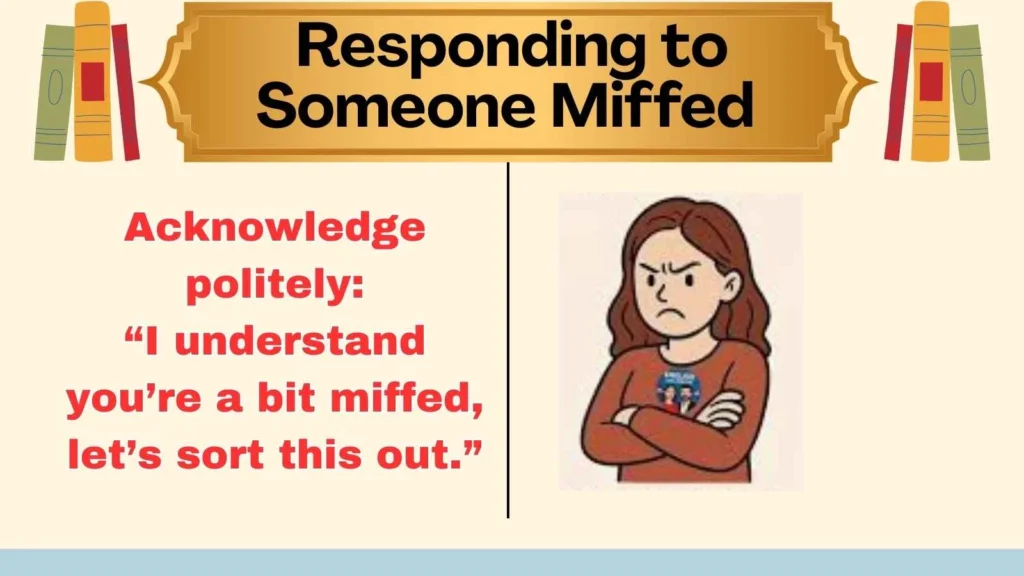
Knowing how to respond is as important as knowing the meaning. Here are some strategies:
- Acknowledge politely: “I understand you’re a bit miffed, let’s sort this out.”
- Light humor: “Oops! I see I’ve earned your miffed face 😅”
- Clarification: Ask for specifics if the irritation is unclear
- Avoid escalation: Keep the tone calm and neutral
Tips Table:
| Situation | Response Example |
|---|---|
| Friend slightly annoyed | “Ah, I get it! My bad 😬” |
| Colleague at work | “Thanks for pointing that out. Let’s fix it.” |
| Social media comment | “Haha, noted! Won’t happen again 😆” |
Suitability in Professional Communication
While “miffed” is friendly and approachable, it’s important to gauge the context:
- Formal emails or reports: Avoid it; use “concerned” or “displeased” instead
- Casual emails, chats, or internal communications: Acceptable and can soften the tone
- Customer interactions: Only if mild irritation is the correct sentiment
Example Professional Usage:
“I was a bit miffed that the report wasn’t submitted on time. Can we ensure it’s ready for tomorrow?”
Here, the tone is professional yet approachable, conveying mild annoyance without hostility.
FAQs About “Miffed”
What does it mean when someone is miffed?
It means they are mildly annoyed or irritated, usually over a small issue.
Is “miffed” a British or American word?
It’s originally British but widely understood in American English, especially in informal contexts.
Can “miffed” sound rude?
Not usually; it’s mild and often used humorously. Tone matters more than the word itself.
What is a synonym for miffed?
Peeved, annoyed, irritated, or cross are common synonyms with slight differences in tone.
Is it okay to use “miffed” in professional settings?
Yes, in casual internal communications, but avoid it in formal reports or emails.
Conclusion
The word “miffed” is a subtle, versatile expression of mild irritation. Whether you encounter it in conversation, texting, or social media, understanding its tone, nuances, and appropriate usage can help you communicate more clearly and avoid misunderstandings.
Remember: miffed isn’t anger, it’s gentle annoyance, often with a hint of humor. Use it wisely, recognize it in others, and respond thoughtfully.
By grasping the meaning, cultural context, synonyms, and professional considerations, you can confidently use miffed in the right situations. Next time someone says they’re miffed, you’ll know exactly how to react—calmly, humorously, or politely.

Smith writes for AniversaryLove.com, sharing touching stories and tips to make love last a lifetime. With a passion for celebrating relationships, Smith inspires readers to cherish every special moment. Through heartfelt guidance, every article sparks romance and connection.