Rule 63 Meaning has become a fascinating concept in the world of fandom, cosplay, and online culture, sparking curiosity among fans of anime, comics, and video games.
At its core, this rule of internet lore suggests that for every fictional character, an alternate-gender version exists, opening a vibrant space for creative expression, fan art, and imaginative storytelling. Understanding Rule 63 is not just about gender-swapped characters, but also about exploring identity, creativity, and community interactions within online platforms like Reddit, Tumblr, and Discord.
For enthusiasts and newcomers alike, grasping this idea enhances appreciation for fan-made content, roleplay dynamics, and artistic reinterpretations. This concept has grown from a niche internet meme into a powerful trend, shaping discussions about gender, fandom culture, and online creativity.
Origin and History of Rule 63

Rule 63 Meaning didn’t just appear overnight. It originated from the early internet “Rules of the Internet”, a set of informal guidelines created by online communities like 4chan. These rules were partly humorous, partly observations about online behavior.
- Timeline:
- 2006–2007: Rule 63 mentioned in niche forums, mainly around anime and gaming communities.
- 2010s: Spread through DeviantArt, Tumblr, and later Reddit.
- 2020s: Became a mainstream fandom concept, referenced in memes, cosplay events, and social media trends.
It quickly grew beyond just a joke, evolving into a tool for creative expression and a lens for gender exploration in fandoms.
“Rule 63 is more than a meme; it’s an invitation to reimagine characters and challenge norms.” – Online Fandom Analyst
Understanding Rule 63 in Online Communities
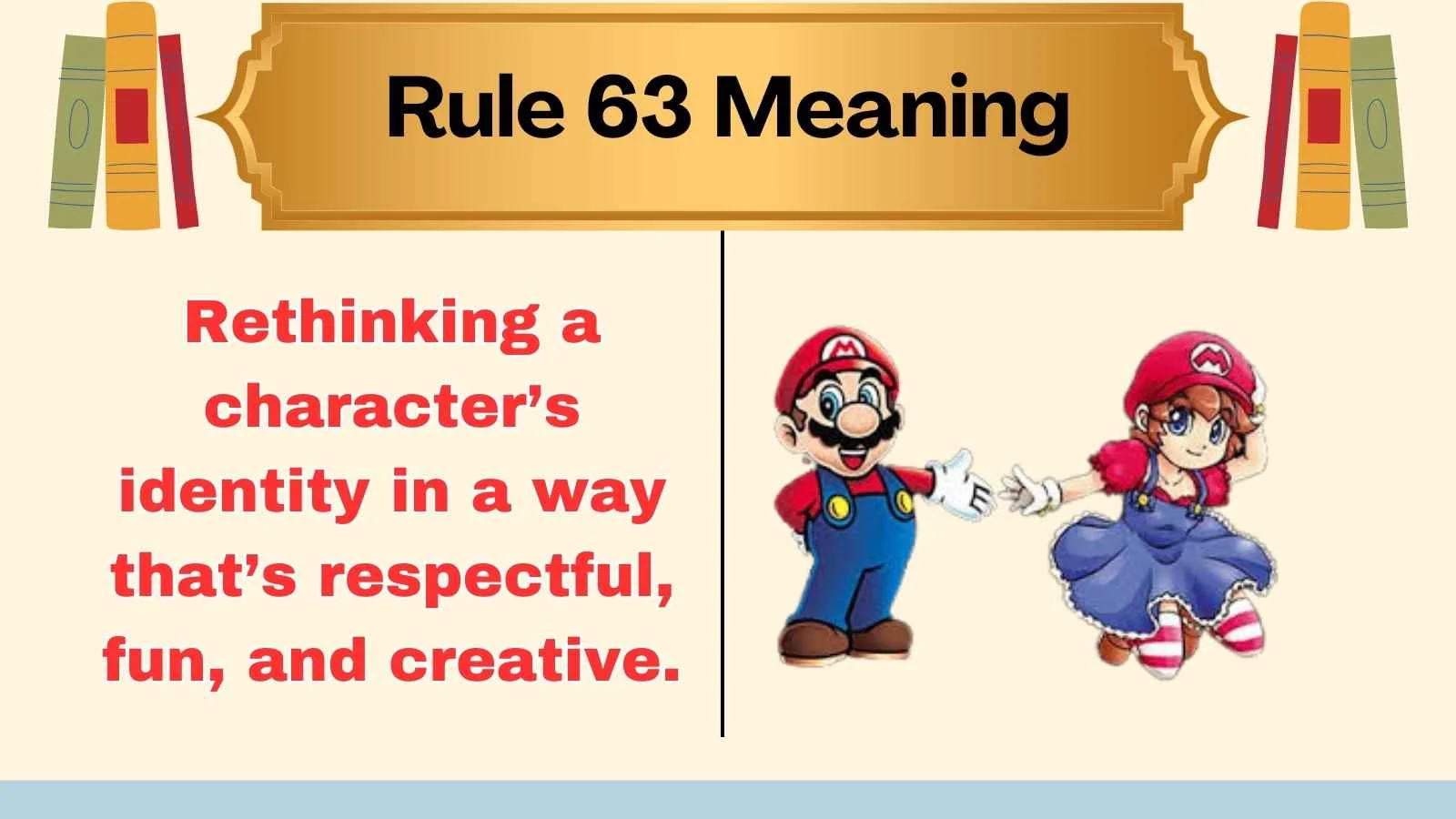
Rule 63 Meaning is widely used online, but understanding its context is key. It’s not just about changing hair or clothes; it’s about rethinking a character’s identity in a way that’s respectful, fun, and creative.
Common Contexts:
- Memes: Quick, humorous illustrations or edits.
- Discussion Threads: Debates about “what if” scenarios.
- Fan Fiction: Stories where characters are gender-swapped, sometimes exploring alternate personalities.
Table: Rule 63 Usage Across Platforms
| Platform | Typical Content | Engagement Style |
|---|---|---|
| Tumblr | Fan art, animations | Likes, reblogs |
| Discussions, memes | Upvotes, comments | |
| DeviantArt | Detailed fan art, projects | Favorites, critiques |
| TikTok | Short transformations | Shares, duets |
By understanding these contexts, you can navigate Rule 63 content more effectively and safely.
Rule 63 in Fan Art

Fan artists are perhaps the most visible champions of Rule 63 Meaning. Through artwork, they explore how a character’s traits would translate across genders.
Key Points:
- Creative Flexibility: Artists can maintain a character’s personality while changing physical appearance.
- Popular Examples:
- Naruto as a female ninja
- Iron Man as a female superhero
- Mario swapped into Princess Peach’s role
Impact on Fandoms:
- Sparks conversation and engagement
- Encourages originality and reinterpretation
- Often used for humor, tribute, or alternate universe storytelling
Rule 63 in Cosplay
Cosplayers love Rule 63 because it allows them to reinterpret favorite characters while showcasing their own creativity.
Guidelines for Rule 63 Cosplay:
- Respect the character’s core identity.
- Avoid stereotypes that could be offensive.
- Focus on authenticity in costume, props, and mannerisms.
Case Study:
At Anime Expo 2019, a cosplayer dressed as a gender-swapped Goku. The attention to detail in outfit, hair, and fighting stance earned her over 50,000 social media shares, demonstrating the popularity and engagement potential of Rule 63 cosplay.
Rule 63 on Social Media

Social media has propelled Rule 63 from niche fandoms into global awareness.
- TikTok: Short videos showing transformations of popular characters.
- Twitter/X: Memes and discussion threads around Rule 63 challenges.
- Reddit: Subreddits dedicated to gender-swapped characters and fan art.
Fact: Hashtags like #Rule63 and #Genderbender have millions of views combined, showing how viral and popular this trend has become.
Common Misconceptions About Rule 63
Many misunderstand Rule 63 Meaning, often thinking it’s inherently sexual or inappropriate. That’s not the case.
- Misconception 1: Rule 63 = sexual content
- Reality: Most Rule 63 content is creative or humorous, not adult.
- Misconception 2: It only applies to anime or games
- Reality: Any fictional character can be reimagined.
- Misconception 3: It’s disrespectful
- Reality: When done mindfully, it celebrates creativity and diversity.
Related Terms and Similar Concepts
Rule 63 isn’t the only concept exploring gender in fandoms. Understanding related terms helps clarify its unique role.
- Genderbending: Similar to Rule 63 but broader; can apply to multiple traits, not just gender.
- Alternate Universe (AU): Fictional settings where characters can be swapped or reimagined.
- Crossplay: Cosplayers portraying characters of the another gender without altering identity.
Comparison Table: Rule 63 vs Related Terms
| Concept | Definition | Focus | Typical Use |
|---|---|---|---|
| Rule 63 | Gender-swapped version of a character | Gender change | Fan art, cosplay, memes |
| Genderbending | Any gender alteration, not limited to one character | Traits and identity | Fan fiction, discussions |
| AU (Alternate Universe) | Entire fictional world altered | Setting and plot | Stories, roleplay |
| Crossplay | Cosplayer portrays another gender character | Performance | Conventions, photoshoots |
Cultural and Regional Variations
The interpretation of Rule 63 Meaning varies worldwide.
- Western Fandoms: Often humorous or experimental, popular on Reddit and Tumblr.
- Eastern Fandoms (Japan, Korea): More integrated with anime culture, sometimes called “genderbender” series.
- Global Trends: Social media has blurred regional differences, creating cross-cultural fandom exchanges.
Professional and Safe Communication
Rule 63 is mostly informal, so professional use requires caution.
Tips for Safe Communication:
- Avoid discussing in work settings unless contextually relevant (like game development or storytelling).
- Respect privacy and avoid NSFW content in professional spaces.
- Use neutral language: “gender-swapped version” instead of slang terms.
Controversies and Hidden Meanings
While Rule 63 is mostly positive, there are potential pitfalls.
- NSFW Misuse: Some content is sexualized, which can lead to misunderstandings.
- Misrepresentation: Poorly executed Rule 63 content can reinforce stereotypes.
- Moderation: Many platforms have rules to prevent offensive Rule 63 content from spreading.
How to Respond or Engage with Rule 63 Content
If you encounter Rule 63 content online, here’s how to approach it:
- Enjoy Creatively: Appreciate the reinterpretation without overanalyzing.
- Engage Respectfully: Leave comments that focus on artistry or humor.
- Stay Safe: Avoid clicking on NSFW content if not intended.
- Participate: Try creating your own Rule 63 art or cosplay while respecting the community norms.
FAQs About Rule 63
What is Rule 63 in simple terms?
Rule 63 means every fictional character can have a gender-swapped version.
Is Rule 63 sexual?
Not inherently. Most Rule 63 content is creative or humorous, though some NSFW versions exist.
Can anyone create Rule 63 content?
Yes, as long as you respect copyright and community guidelines.
How does Rule 63 differ from genderbending?
Genderbending can involve broader trait changes, while Rule 63 specifically swaps a character’s gender.
Where is Rule 63 most popular?
Tumblr, Reddit, DeviantArt, and TikTok are the most active platforms for Rule 63 content.
Conclusion
Rule 63 Meaning has evolved from a simple internet joke into a powerful creative tool.
It allows fans to explore characters in imaginative ways, challenge gender norms, and engage deeply with communities. From fan art and cosplay to social media trends, Rule 63 reflects the diversity, humor, and innovation of fandom culture.
By understanding its history, usage, and nuances, you can appreciate Rule 63 not just as a meme, but as a celebration of creativity and expression. So next time you see a gender-swapped Spider-Man or Sailor Moon, you’ll know exactly what’s behind it—and maybe even be inspired to create your own.

Jhon is a passionate writer at AniversaryLove.com, dedicated to sharing heartfelt messages and creative ways to celebrate love and special moments. With a flair for crafting emotional and relatable content, he inspires readers to express their feelings in meaningful ways. His words connect hearts and make every celebration unforgettable.