Unhinged Meaning goes far beyond the surface, diving into a powerful concept that captures extreme behavior, unpredictability, and emotional intensity.
In everyday conversations, movies, and social media, people often label actions or individuals as unhinged when they seem wild, irrational, or out of control. Understanding this term isn’t just about definition—it’s about recognizing the subtle cues of mental strain, emotional volatility, and behavioral extremes that surround it.
From psychology to pop culture, the word is layered with nuance and context, making it both intriguing and sometimes alarming. Whether you’ve seen it used in a shocking tweet, a gripping story, or a heated debate, knowing the true essence of unhinged can help you interpret situations more accurately and communicate with clarity and insight.
What Does Unhinged Mean?
At its core, “unhinged” describes someone or something that has become mentally unstable, erratic, or irrational. But context matters. In casual slang, it often refers to someone acting dramatically or unpredictably rather than being clinically unwell.
Examples in sentences:
- She went completely unhinged when she saw the surprise.
- His unhinged laughter made everyone in the room uneasy.
- The meme about the politician was totally unhinged, and people couldn’t stop sharing it.
Here, unhinged can describe extreme emotional responses, behavior that seems out of control, or statements that defy logic.
Quick Fact: Psychologists sometimes caution against labeling someone as “unhinged” casually, as it may stigmatize mental health issues.
Origins & Historical Background
The word “unhinged” comes from the literal meaning of something being removed from its hinge. Imagine a door swinging wildly because it’s no longer properly attached. That metaphor was transferred to human behavior in the 19th century, describing someone whose emotional or mental balance seemed disrupted.
Timeline of Usage:
| Year/Period | Usage |
|---|---|
| 1800s | Literary descriptions of “unhinged” minds in novels and plays. |
| Early 1900s | Used in newspapers to describe erratic behavior. |
| 2000s | Entered online slang and meme culture. |
| 2020s | Popularized on social media as a casual term for dramatic or extreme actions. |
The transition from formal English to slang highlights how words evolve and adapt to culture.
Slang & Modern Usage
Today, unhinged is heavily used in social media and memes, often for dramatic effect rather than literal meaning. On platforms like Twitter, TikTok, and Reddit, users might call a funny video “unhinged” if it’s chaotic or wild.
Key Points:
- Often used humorously or sarcastically.
- Describes unpredictable, over-the-top, or outrageous actions.
- Can highlight absurdity without implying real mental illness.
Example in social media context:
“This TikTok compilation of people dancing in the rain is completely unhinged 😂”
Here, the word conveys chaos, humor, and entertainment, not danger.
Behavioral & Psychological Implications
While slang usage is casual, unhinged can describe serious behavior too. Psychologists define behaviors as unhinged when they involve extreme mood swings, irrational actions, or inability to cope with situations.
Signs of behavior that may be labeled unhinged:
- Sudden emotional outbursts.
- Erratic decision-making.
- Overreaction to minor stressors.
- Statements or actions that defy social norms.
Important: Using “unhinged” to describe someone should be done carefully. Casual labeling can stigmatize mental health or misunderstand actual conditions like anxiety, bipolar disorder, or personality disorders.
Case Study:
A viral video showed a public figure yelling at a minor disagreement. Social media users called it “unhinged,” but mental health experts clarified that this was likely a temporary emotional reaction, not a clinical issue.
Common Misconceptions
Many people assume unhinged is synonymous with wild, impulsive, or mad, but the meanings differ slightly:
| Term | Nuance | Example |
|---|---|---|
| Unhinged | Emotional, erratic, dramatic | His reaction was unhinged, not dangerous. |
| wild | Broad, can mean fun, strange, or impulsive | That was a wild idea! |
| impulsive | Usually severe mental illness | The criminal was declared legally impulsive. |
| Erratic | Inconsistent or unpredictable | Her erratic behavior confused everyone. |
Key takeaway: Context determines whether unhinged is lighthearted, descriptive, or offensive.
Similar Terms & Alternatives
If you want to avoid repetition or express nuances, here are some alternatives:
Synonyms and Use Cases:
- Erratic: Focuses on unpredictability.
- Over the top: Casual, dramatic expression.
- Deranged: Stronger, can imply mental illness.
- Chaotic: Suggests disorder rather than emotional instability.
- Unbalanced: Neutral, can describe emotion or logic.
Example Table:
| Word | Tone | Use Case |
|---|---|---|
| Unhinged | Casual/serious | Social media or extreme behavior |
| Erratic | Neutral | Behavior inconsistent over time |
| Over the top | Humorous | Exaggerated actions or reactions |
| Deranged | Serious | Criminal or dangerous behavior |
| Chaotic | Descriptive | Messy, uncontrolled situations |
Regional or Cultural Differences
Unhinged is widely understood in English-speaking countries but can carry slightly different connotations:
- US: Common in social media, casual and humorous.
- UK: Sometimes perceived as stronger, implying instability.
- Australia: Often playful, describing chaos or exaggeration.
Tip: Always gauge the audience. Calling someone unhinged in professional settings or in formal writing may be seen as rude or inappropriate.
Suitability in Communication
Using unhinged in everyday conversation is usually fine, but context matters:
- Professional communication: Avoid labeling colleagues as unhinged. Use neutral terms like erratic or unexpected.
- Casual conversation: Safe in informal speech or humor.
- Social media: Perfect for memes, viral content, or dramatic storytelling.
Pro Tip: Pairing the term with a context explanation reduces misunderstandings:
“The team’s unhinged reaction to the surprise launch was hilarious, but they handled it professionally afterward.”
Hidden, Offensive, or Controversial Meanings
While often harmless, unhinged can become offensive if:
- Used to attack someone’s mental health.
- Paired with insults or derogatory remarks.
- Applied in a legal or formal context implying instability.
Quote from a language expert:
“Words like unhinged carry weight. Even if popular online, they should be used thoughtfully.”
How to Respond or React
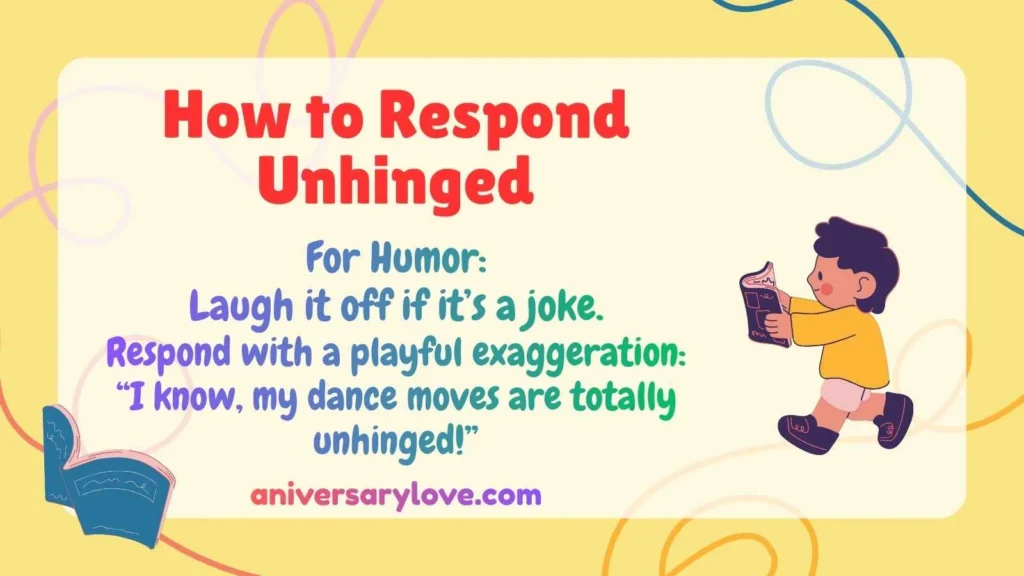
If someone calls you or someone else unhinged, here are some strategies:
For Humor:
- Laugh it off if it’s a joke.
- Respond with a playful exaggeration: “I know, my dance moves are totally unhinged!”
For Serious Situations:
- Clarify intent: “I think you mean chaotic, not unwell.”
- Keep communication neutral: Avoid escalation.
Tips:
- Context is everything.
- Don’t assume mental health issues without evidence.
- Use humor or neutrality to defuse tension.
FAQs
What does unhinged mean in slang?
It usually describes someone acting dramatic, chaotic, or unpredictable, often humorously.
Is unhinged a negative term?
It can be, depending on context. Online, it’s often playful, but it can also imply instability.
Can you use unhinged professionally?
Not really. Use neutral alternatives like erratic or unexpected behavior in formal settings.
Where is unhinged most popular?
Primarily in the US, UK, Australia, and on social media platforms like TikTok, Twitter, and Reddit.
Is unhinged the same as wild?
Not exactly. “wild” is broader and can mean strange, fun, or impulsive, while “unhinged” focuses on erratic, unpredictable, or extreme behavior.
Conclusion
Understanding unhinged meaning is more than knowing a definition—it’s about context, tone, and culture. The word can describe someone acting dramatically, chaotic situations, or extreme reactions, but it can also carry psychological implications if misused.
Whether online, in conversation, or in writing, using unhinged effectively requires:
- Awareness of the audience.
- Sensitivity to mental health implications.
- Creativity for humor or dramatic effect.
Next time you see the term unhinged, you’ll recognize whether it’s playful, serious, or potentially offensive—and you’ll know exactly how to respond.

Jhon is a passionate writer at AniversaryLove.com, dedicated to sharing heartfelt messages and creative ways to celebrate love and special moments. With a flair for crafting emotional and relatable content, he inspires readers to express their feelings in meaningful ways. His words connect hearts and make every celebration unforgettable.