
Frontshots Meaning holds a powerful place in today’s digital culture, especially as people search for clearer, sharper ways to express identity online.
Understanding this term helps readers navigate the evolving world of visual communication, social media expression, and personal branding. In simple terms, frontshots focus on direct, front-facing images that highlight confidence, authenticity, and presence — qualities that modern audiences value deeply.
Whether used in photography, online profiles, or creative content, the meaning behind frontshots reflects a blend of clarity, self-presentation, and visual impact.
Many individuals use this style to showcase their personality, aesthetic appeal, and true emotions, making it a popular choice across trending platforms. As more people aim to enhance the way they present themselves, understanding the deeper purpose and usage of frontshots becomes essential for building trust, engagement, and strong visual identity.
Frontshots Meaning: A Clear, Modern Guide to the Term
What “Frontshots” Actually Means Today
The first step is understanding what people really mean when they say frontshots. The word has evolved far beyond its photography roots, and it now carries multiple layers—some completely innocent, others much more suggestive.
Primary Meanings of “Frontshots”
Here are the four most common definitions used today:
- A direct photo taken from the front angle
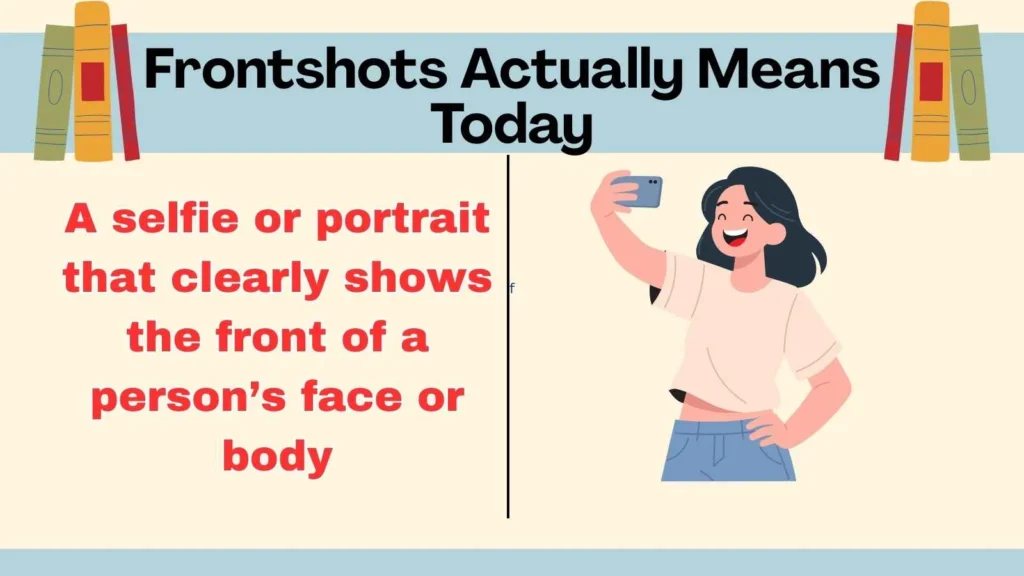
This is the most literal meaning and still widely used in photography and modeling. - A selfie or portrait that clearly shows the front of a person’s face or body
Often used casually in social media chats. - A flirty or suggestive picture
Some users—especially younger audiences—use frontshots as coded language for more revealing or intimate photos. - A preview-style image used for listings or product photography
Fashion sellers, online shops, and creators use the term for structured front-angle product shots.
Why the meaning changes
The meaning you’re dealing with depends on:
- Who said it
- Where they said it
- The tone they used
- Whether it’s in a public conversation or a private DM
- The age group involved
For example, a photographer using the word means one thing. A teenager on Snapchat might mean something completely different.
Origins and Evolution of the Term
The phrase Frontshots Meaning didn’t appear overnight. It slowly changed with the internet, especially visual culture.
Early Photography Roots
Front shot has existed since the early days of portrait photography. It simply meant:
- A photo taken from the front
- A clear forward-facing angle
Print photographers, studio owners, and commercial image makers used it normally for decades.
Digital Shift
When social media reshaped photography, the word became informal shorthand. People wanted a quick way to request:
- A face picture
- A full-body picture
- A frontal preview shot
This is where front shots eventually fused into the single term frontshots—short, catchy, and text-message friendly.
Rise of Slang Usage
Around the early 2010s, as Snapchat and Instagram DMs grew, some users started using frontshots as a coded request for:
- Cute selfies
- Flirty photos
- More revealing images
This dual usage is the main reason many people misunderstand the word today.
Quote
“Most slang terms evolve when communities shorten everyday words for speed, secrecy, or style.”
Frontshots fits this pattern perfectly.
How People Use “Frontshots” in Real Conversations
Social Media Usage (Instagram, Snapchat, TikTok)
On social platforms, context shapes everything. Here are the most common uses:
- “Send frontshots” in a DM
Could mean a simple selfie request or, depending on the tone, something more suggestive. - Story replies
Someone might comment “nice frontshot!” referring to an aesthetic selfie. - Creator communities
Influencers use it when showing merch, clothing, or front-view outfit shots.
Everyday Conversations & Texting
Among friends, it often gets used casually:
- “Send me a frontshot so I know it’s you.”
- “Frontshot looks better than your side angle here.”
Texting meaning tends to stay on the safer side unless the conversation already has a flirtatious tone.
Photography & Creative Industries
Photographers still use the word professionally to describe:
- Modeling portfolio images
- Headshots
- Frontal product shots
In this setting, the meaning is purely technical and never inappropriate.
Adult or Suggestive Contexts
Some circles—usually younger users—use frontshots to describe:
- Revealing selfies
- Photos showing cleavage or chest
- Body-focused frontal angles
The meaning depends heavily on relationship and tone, so misreading it can cause uncomfortable misunderstandings.
Misinterpretations and Gray Areas
Because the word operates in two worlds (innocent + suggestive), it often causes confusion.
Why Different Age Groups Misread It
Teenagers might view it as slang. Adults in their 30s or 40s may only recognize the innocent meaning.
Common Misunderstandings
- Thinking every use is sexual
- Thinking the term always refers to selfies
- Assuming the person requesting it has bad intentions
- Believing the term is universal (it’s not)
How to Identify the Intended Meaning
Look at:
- The conversation tone
- Emoji usage
- Relationship with the person
- Platform (Snapchat vs LinkedIn)
- Whether the chat already has flirtatious language
Example
“Can you send your frontshots for the ID card?”
— Completely harmless.
“Send some frontshots 😉”
— Probably not innocent.
Related Phrases and Close Alternatives
Here’s a comparison table to show how frontshots differs from similar words:
| Term | What It Usually Means | Innocent or Suggestive? | Notes |
|---|---|---|---|
| Frontshots | Photos taken from the front | Both | Context matters a lot |
| Selfie | Front-facing photo taken by yourself | Innocent | Most neutral term |
| Portrait | Professional or aesthetic image | Innocent | Often used in photography |
| Front pic | Casual version of frontshot | Both | More common than “frontshots” |
| Frontal | Direct front angle | Suggestive in slang | Avoid in professional settings |
| Headshot | Close-up of the face | Innocent | Used in resumes and profiles |
Appropriate Responses When Someone Uses the Term
Neutral or Casual Context
If someone says:
- “Send a frontshot for the form”
- “Your frontshot looks great here”
Safe responses include:
- “Sure, I’ll send one.”
- “Do you want a close-up or full body?”
- “Here’s a clear frontshot. Let me know if you need another angle.”
When You’re Unsure What They Mean
You can ask naturally without sounding awkward:
- “Do you mean a regular front-facing picture?”
- “Just checking—selfie or full body?”
- “Do you want a simple front photo?”
When the Term Feels Suggestive or Inappropriate
If the message feels uncomfortable:
- “I’m not sharing personal photos like that.”
- “I prefer not to send pictures in that context.”
- “That request doesn’t feel appropriate.”
Examples of Safe Replies
- “Can you clarify what type of frontshot you need?”
- “I can send a standard front picture if that’s what you mean.”
- “I’m not comfortable sending that kind of photo.”
Cultural, Age-Based, and Community Differences
Age Groups
- Teenagers (13–19)
Often use it as slang; might mean flirty pics. - Young Adults (20–30)
Use it casually but understand double meaning. - Adults 30+
Typically interpret it literally.
Platform Differences
| Platform | Common Meaning |
|---|---|
| Snapchat | Often slang / flirty |
| Mix of literal & slang | |
| TikTok | Usually literal for creators |
| Mostly literal | |
| Literal | |
| Discord | Community-dependent |
Geographic Differences
The slang use is more common in:
- North America
- Parts of Western Europe
- Urban areas with strong online culture
Other regions stick to the literal meaning.
When “Frontshots” Can Become Offensive or Misused
Even harmless words become problematic when used in the wrong situation.
When It Crosses the Line
- Asking for frontshots from coworkers
- Requesting frontshots from someone underage
- Using the word with flirtatious emojis at work
- Demanding photos without consent
- Using it to pressure someone emotionally
Harassment Concerns
Unwanted requests for any type of body-focused photos can be considered harassment. Always respect boundaries.
Tone and Intent Change Everything
Example of inappropriate usage:
- “Send me your frontshots baby 😏” (in an unwanted conversation)
Example of safe usage:
- “Frontshot of the product will help us finalize the listing.”
Suitability in Professional or Public Settings
When it comes to business, clarity matters.
Places It’s Acceptable
- Fashion photography
- Product photography
- ID verification
- Modeling agencies
- Creative project briefs
Places It Should Be Avoided
- Office emails
- School environments
- Corporate chats
- HR conversations
- Public posts where tone can be misinterpreted
Better Alternatives for Work
- “Front photo”
- “Headshot”
- “Frontal product image”
- “Front-facing picture”
Using these avoids misunderstandings entirely.
Quick Reference Table: Safe, Unsafe, and Ambiguous Uses
| Scenario | Meaning | Safe? |
|---|---|---|
| Fashion listing | Front view photo | ✔ |
| Modeling portfolio | Frontal headshot | ✔ |
| Stranger DM requesting it | Flirty or inappropriate | ❌ |
| Group chat among friends | Casual selfie request | ✔ / ⚠ |
| Teen slang | Suggestive | ⚠ |
| Workplace request | Highly unprofessional | ❌ |
| Creative project briefing | Technical use | ✔ |
FAQs
What does “Frontshots” mean in simple words?
It usually means a photo taken from the front, but some people use it as slang for flirty pictures.
Is “Frontshots” always inappropriate?
Not at all. In photography and professional contexts, it’s completely innocent.
Why do people use the term instead of saying “front photo”?
It’s shorter, trendier, and common in social media slang.
Can someone use “Frontshots” at work?
It’s risky. The term can be misunderstood, so more professional wording is better.
How do I reply if I don’t know what they mean?
Ask politely: “Do you mean a regular front-facing picture?” It clears everything up without sounding awkward.
Final Thoughts
The real Frontshots Meaning depends on context. What starts as a simple photography term can shift into slang depending on age, culture, and online habits.
If you ever feel unsure, ask for clarification. Clear communication prevents misunderstandings and protects personal boundaries.
The key takeaway?
Use the term wisely, read the room, and choose safer alternatives in professional or unfamiliar settings.
Jhon is a passionate writer at AniversaryLove.com, dedicated to sharing heartfelt messages and creative ways to celebrate love and special moments. With a flair for crafting emotional and relatable content, he inspires readers to express their feelings in meaningful ways. His words connect hearts and make every celebration unforgettable.