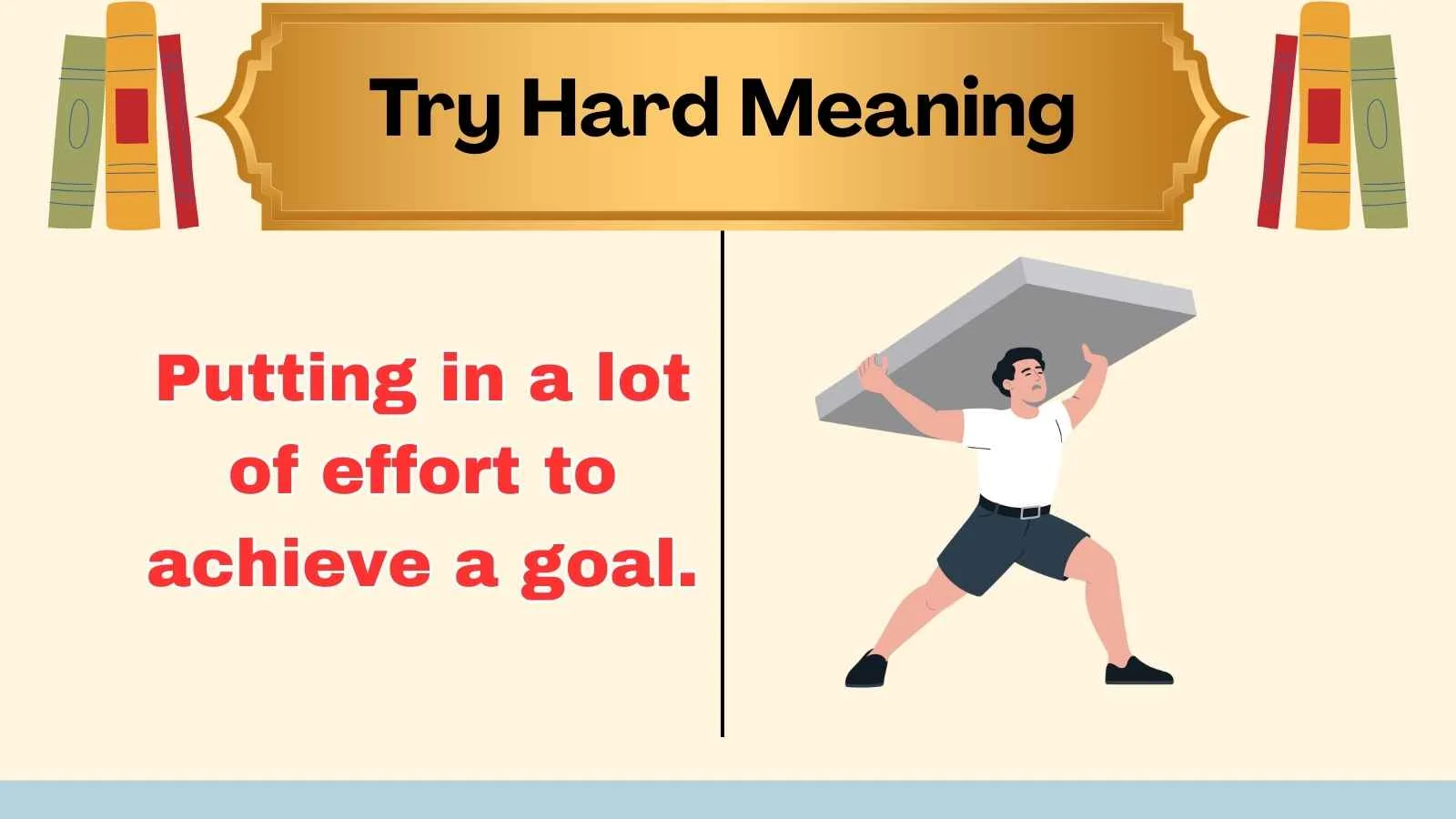
Try Hard Meaning refers to putting extra effort, strong determination, and consistent focus into achieving a goal, even when challenges, pressure, or failure appear. In everyday language, try hard meaning highlights a mindset where a person refuses to quit and continues working with discipline, motivation, and persistence.
This phrase is commonly used in education, sports, career growth, and self-improvement, showing the importance of effort over excuses. Understanding Try Hard Meaning also connects with ideas like hard work, dedication, grit, and mental strength, which are essential for long-term success.
People who try hard often develop better problem-solving skills, stronger confidence, and a growth-oriented attitude. Whether applied to studies, personal goals, or professional life, the concept emphasizes that consistent effort beats talent without effort. Knowing the true Try Hard Meaning helps readers apply it practically, making it a powerful phrase for motivation, personal development, and real-life achievement.
What Does Try Hard Mean?
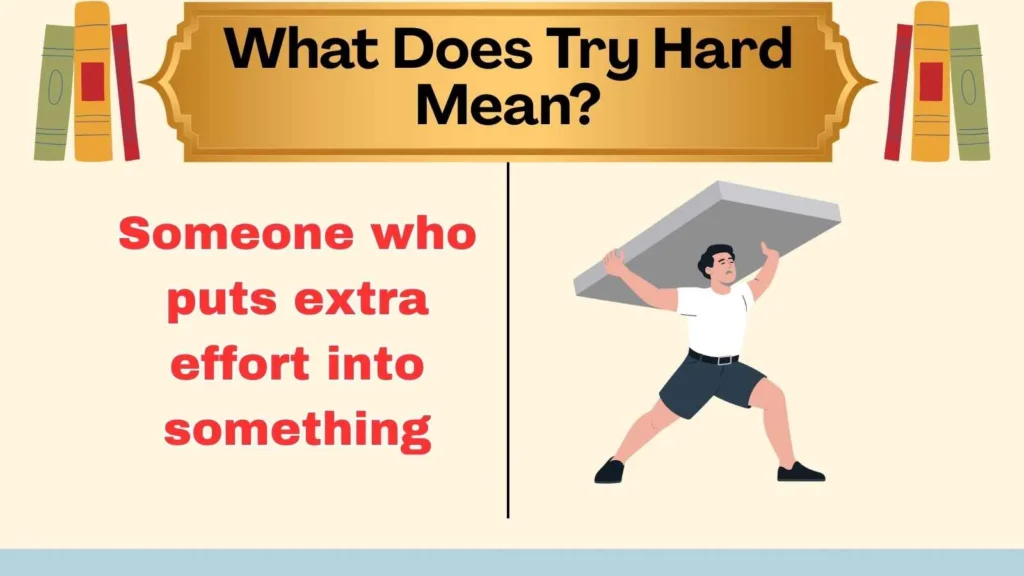
At its core, the try hard meaning refers to putting in a lot of effort to achieve a goal. In traditional English, that’s all it meant. Someone who studies late, practices longer, or pushes themselves further is trying hard.
However, modern usage added layers.
Today, try hard can mean:
- Someone who puts extra effort into something
- Someone who cares deeply about results
- Someone who is seen as overdoing it
- Someone accused of seeking approval or attention
The phrase becomes negative when effort feels forced, performative, or out of sync with the situation.
Think of it like this:
Effort is neutral. Judgment turns it positive or negative.
Origin and Evolution of the Term
The phrase try hard existed long before the internet. Teachers used it. Parents encouraged it. Coaches demanded it.
Then online culture happened.
As digital communities grew, especially forums, games, and social media platforms, try hard took on sarcasm. It became shorthand for:
- “You care too much”
- “Relax, it’s not that serious”
- “Stop showing off”
This shift didn’t happen overnight. It evolved as people began policing effort in casual spaces. When something is supposed to be “just for fun,” visible ambition can trigger mockery.
Effort broke the unspoken rules.
How Try Hard Is Used in Real Life
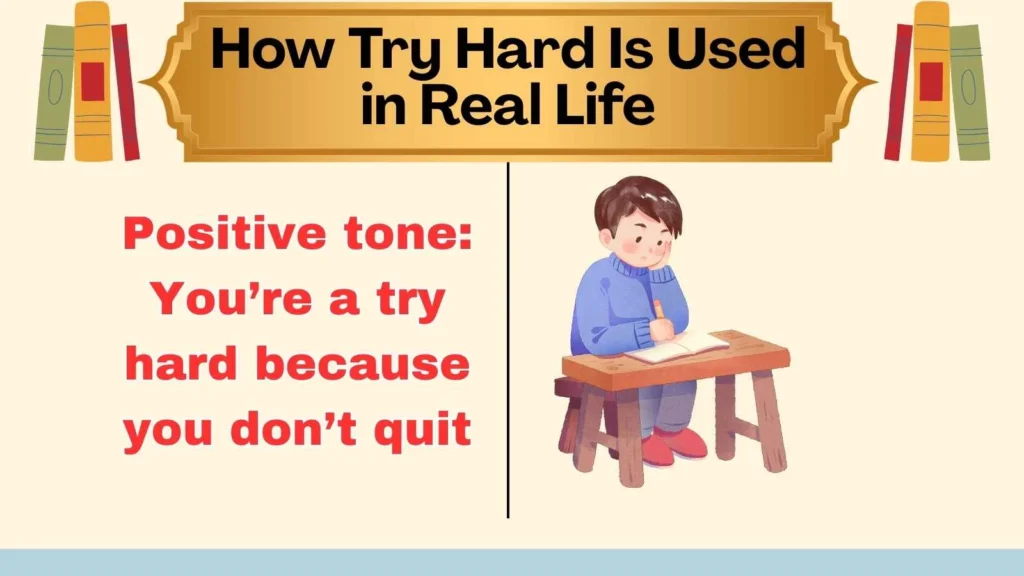
In everyday conversations, the try hard meaning changes with delivery.
Here’s how it usually plays out:
- Positive tone: You’re a try hard because you don’t quit
- Neutral tone: You really put effort into this
- Negative tone: You’re doing way too much
For example:
“She’s a try hard at the gym.”
That could mean she’s disciplined. Or it could mean someone feels threatened.
Context decides everything.
Try Hard Meaning in Digital Communication
Digital spaces amplify meaning. Without facial expressions or tone, try hard often sounds harsher than intended.
Try Hard Meaning in Texting
In texting, short messages leave little room for nuance.
Common interpretations include:
- Passive-aggressive judgment
- Sarcastic dismissal
- Playful teasing among friends
A simple “ok try hard” can feel cold or mocking, even if no harm was intended.
Rule of thumb: The shorter the message, the sharper the sting.
Try Hard Meaning on Social Media
On social platforms, try hard is often weaponized.
It shows up in:
- Comment sections
- Reaction posts
- Call-out culture
People use it to shame others for:
- Caring too much
- Being ambitious
- Showing enthusiasm
Ironically, many who accuse others of trying hard put significant effort into crafting insults. That contradiction fuels endless memes.
Try Hard Meaning in Gaming Culture
Gaming communities gave try hard a life of its own.
In games, a try hard is often someone who:
- Plays seriously in casual modes
- Uses optimal strategies
- Focuses on winning, not vibes
Here’s the paradox:
| Perspective | Interpretation |
|---|---|
| Competitive player | Try hard = disciplined, skilled |
| Casual player | Try hard = ruins the fun |
| Spectator | Try hard = intense, focused |
In ranked matches, trying hard is expected. In casual modes, it’s criticized. Same behavior. Different expectations.
Try Hard at School, Work, and Personal Growth
Outside the internet, the try hard meaning becomes more complex.
In School
Students labeled as try hards often:
- Study consistently
- Ask questions
- Aim for high grades
The label usually comes from peers, not teachers.
Why? Because visible effort disrupts social balance. It highlights contrast.
In the Workplace
At work, calling someone a try hard can be subtle shade.
It may imply:
- They’re overcompensating
- They’re seeking validation
- They’re breaking unspoken norms
Yet organizations thrive on effort.
Here’s the reality:
| Environment | How effort is viewed |
|---|---|
| Toxic culture | Try hard = threat |
| Healthy culture | Try hard = asset |
| Leadership | Try hard = growth potential |
Effort only becomes a problem when insecurity enters the room.
Why Being Called a Try Hard Can Feel Insulting
The insult stings because it attacks motivation, not behavior.
It suggests:
- You care too much
- You don’t belong
- You’re not “cool” enough
Psychologically, people use try hard to restore balance when someone raises the bar. Instead of matching effort, they dismiss it.
That’s easier.
As one saying goes:
“Mock effort when you don’t want to compete.”
Common Misunderstandings About Try Hard
Many people confuse effort with desperation.
Let’s clear that up.
- Trying hard is not insecurity
- Effort is not fake
- Caring is not weakness
Here’s a quick comparison:
| Myth | Reality |
|---|---|
| Try hards are desperate | Many are disciplined |
| Try hards want attention | Many want results |
| Try hards lack confidence | Effort often comes from confidence |
Intent matters more than appearance.
Similar Words and Phrases to Try Hard
Language offers many alternatives. Choosing the right one avoids misunderstanding.
Positive Alternatives
- Dedicated
- Committed
- Driven
- Focused
Neutral Alternatives
- High-effort
- Serious
- Invested
Negative Alternatives
- Overbearing
- Performative
- Excessive
Words shape perception. Use them carefully.
How to Respond When Someone Calls You a Try Hard
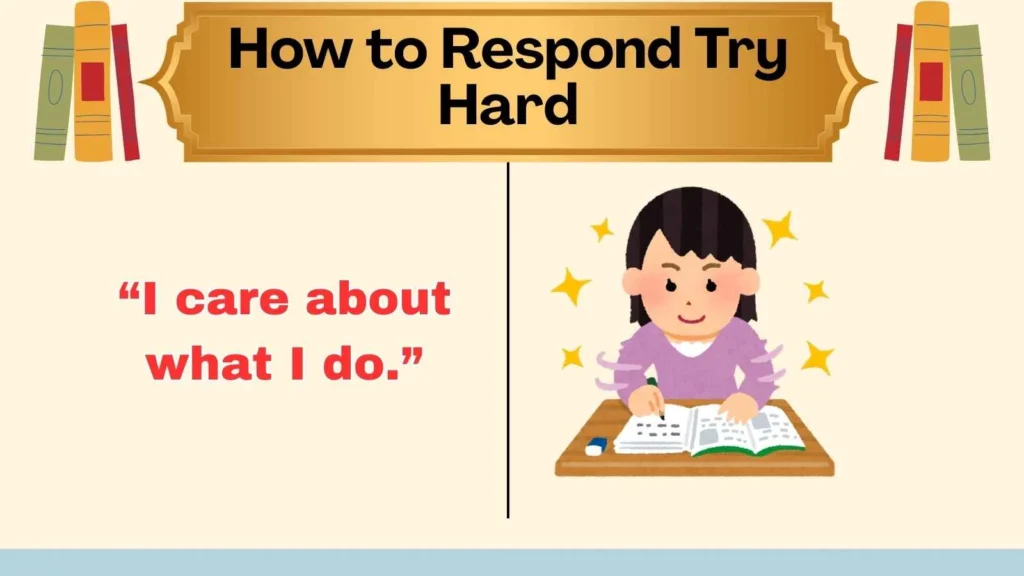
Your response sets the tone.
Calm Responses
- “I care about what I do.”
- “I enjoy putting in effort.”
Professional Responses
- “I take my responsibilities seriously.”
- “I aim for high standards.”
Light Humor
- “Guilty. Effort is my thing.”
Confidence disarms criticism faster than defensiveness.
Cultural and Regional Interpretations
The try hard meaning isn’t universal.
In some cultures, visible effort earns respect. In others, subtlety matters more.
- Achievement-focused cultures value discipline
- Casual cultures value ease
- Online subcultures amplify sarcasm
Understanding context prevents misreading intent.
Try Hard in Memes and Internet Slang
Memes exaggerate reality.
Online, try hard often becomes a caricature:
- Over-edited photos
- Dramatic poses
- Excessive enthusiasm
Memes mock extremes, not effort itself. Still, repetition shapes perception.
Is Try Hard Ever Offensive?
Yes, when used to shame.
It crosses a line when:
- Used repeatedly
- Directed at vulnerability
- Reinforced by group mocking
Words don’t exist in isolation. Impact matters more than intent.
Is Try Hard Appropriate in Professional Communication?
In professional settings, try hard is risky.
Why?
- It sounds dismissive
- It lacks clarity
- It can undermine morale
Better options include:
- “Highly motivated”
- “Strong work ethic”
- “Consistently proactive”
Precision beats slang at work.
Try Hard vs Similar Terms
Let’s clarify key comparisons.
| Term | Key Difference |
|---|---|
| Try hard | Focus on visible effort |
| Overachiever | Focus on results |
| Cringe | Focus on social discomfort |
| Dedicated | Focus on commitment |
Labels reflect perspective, not truth.
FAQs
Is being a try hard a bad thing?
No. Effort becomes negative only when judged through insecurity or sarcasm.
Can try hard ever be a compliment?
Yes. In supportive environments, it highlights commitment and discipline.
Why do people mock effort?
Mockery protects ego. It’s easier than matching the work.
How do you tell if try hard is an insult?
Listen to tone, timing, and context. Sarcasm usually signals insult.
Should you stop trying hard to fit in?
No. Adjust strategy, not standards.
Final Thoughts
The try hard meaning says more about culture than character.
Effort exposes contrast. Contrast invites judgment. Judgment often hides fear.
Trying hard isn’t embarrassing. Pretending not to care often is.
Effort builds skill. Discipline compounds results. Confidence grows through action.
So if someone calls you a try hard?
Smile.
Keep going.
Let results speak louder than labels.

Smith writes for AniversaryLove.com, sharing touching stories and tips to make love last a lifetime. With a passion for celebrating relationships, Smith inspires readers to cherish every special moment. Through heartfelt guidance, every article sparks romance and connection.